State of Influence Index 2026 now LIVE - Explore the creators, trends and platforms driving conversations
In beauty, things move fast. But strategy? That’s what sets the leaders apart.
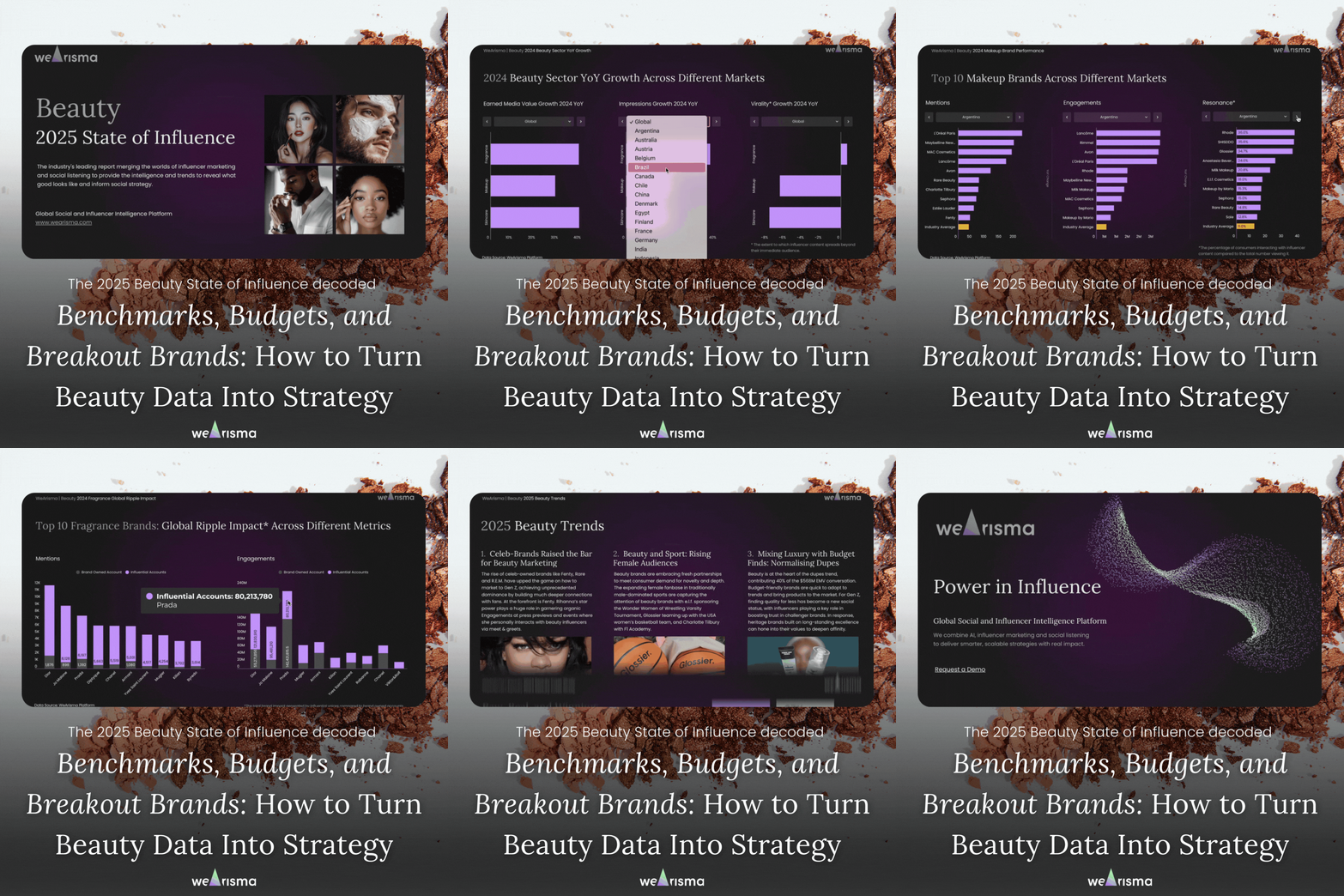
Our 2025 Beauty State of Influence Report is packed with insights, but knowing how to turn those into action is where the real value lies. Whether you’re optimising influencer partnerships, reallocating budgets, or jumping on the right trends, here’s how to make the most of your data.
Published On: April 24, 2025
Your Step-by-Step Guide: Turning Beauty Influence Data into Strategy
Before you build a winning strategy, you need to know where you stand.
Start with a simple question:
How does your brand stack up against the competition?
📊 Key sections to check in the report:
Metrics to benchmark: EMV, Ripple Impact, and YoY Growth
Engagement vs. Owned Channels
If influencer content for brands like Sephora is driving 8x more engagement than their owned social, but yours isn’t, it may be time to reassess your creator strategy and refine your approach to partnership selection.
Growth or Decline
Are you growing with the market? Skincare mentions grew 7% year-over-year, but resonance dropped 6%. If your brand follows that pattern, shift toward more authentic, educational content – think dermatologist-led videos like CeraVe’s.
If you’re winning:
Lean in. If you’re a top performer (e.g., Dior in fragrance), double down on what’s working, like celebrity-led storytelling or standout product moments.
If you’re falling behind:
Rethink your mix. For instance, if your makeup EMV is trending downward, consider reallocating budget to higher-growth categories like skincare or hybrid wellness.
Once you’ve benchmarked your performance, the next step is to uncover where the biggest opportunities lie.
📊 Key sections to explore in the report:
Metrics to benchmark: Virality Grades, Community Size and Growth
Influencer Value, Not Just Reach
Who’s actually moving the needle? Vichy earned an “A” virality grade, meaning its influencer content consistently spreads well beyond the creator’s immediate audience. Seek out similar creators whose content earns traction organically.
Community Momentum
Is your influencer network expanding or flatlining? Garnier, for instance, saw an 18% increase in community size, signalling strong recruitment and activation strategies. If growth is stagnant on your side, it might be time to explore scalable approaches like incentivised UGC or ambassador programs.
Double down on what’s working
Identify high-virality formats in your space (e.g., GRWM videos in beauty) and replicate those themes across new creators and content styles.
Strengthen creator loyalty
If your advocacy retention is low, consider launching a retainer or long-term ambassador program to deepen relationships and drive consistency over time.
Staying relevant means keeping pace with where the conversation is heading, and acting quickly when the right opportunity appears.
📊 Key sections to explore in the report:
2025 Trends
Momentum Shifts in Consumer Behavior
Trends like the “dupes” movement generated $568M in EMV, with brands like e.l.f. leading the charge by offering savvy, lower-cost alternatives to prestige staples. If similar trends align with your brand, they represent high-leverage entry points.
Emerging Cultural Collisions
Cross-category moments, like beauty-sports collaborations, are gaining traction, Glossier x USA Basketball being a standout example. If you’re not participating in these fast-growing intersections, you may be missing high-reach potential.
Lean in with strategic alignment
When a trend reflects your brand’s positioning (e.g., “sensory marketing” for fragrance), craft timely creative that brings it to life. Rhode’s dessert-themed product launches are a great example.
Stay focused on brand fit
Not every trend is worth chasing. If a movement doesn’t resonate with your identity, like celebrity-heavy campaigns for a clinically positioned skincare line, it’s better to pass.
A strong strategy starts with data, but it only drives results when paired with clear execution. Here’s how to bring your insights to life in the next 90 days.
| Month | Focus | Impact |
|---|---|---|
| Month 1 | Evaluate your influencer roster through a performance lens. Prioritize creators with high virality scores and scalable content styles. | 📈 +20% EMV through better-performing partnerships |
| Month 2 | Pilot a trend-led campaign, such as a “dupe” showdown or themed GRWM content. Use it to test new engagement levers. | 💬 +15% boost in engagement from culturally relevant content |
| Month 3 | Shift budget into top-growth categories (e.g., skincare over makeup) based on the report’s YoY performance data. | 💰 +10% ROI from smarter channel and product allocation |
📍 Benchmark with intention
Use the report’s rankings and metrics to see exactly where you stand in the market, and where you have room to grow.
📊 Double down on what works
Let the data lead. If formats, platforms, or creators are delivering (think Sephora’s TikTok buzz), scale those efforts.
⚡ Stay nimble
Culture moves fast. The brands winning in 2025 – like NOYZ with its Gen Z-first storytelling – are the ones adapting in real-time.
Want to turn these insights into a clear strategy?
👉 Book a strategy session here and we’ll help you map the way forward.
Access timely cultural trends, strategic creator guidance, and industry best practices.

Cannes Lions has always been where the industry takes stock, not just of the work, but of where the money is going and why. This year, creator marketing will be front and centre. Not because it’s new, but because the ground underneath it is shifting in ways that are forcing brands to fundamentally rethink how they plan, measure and value creator partnerships.
Here are the three topics we expect to define the week.
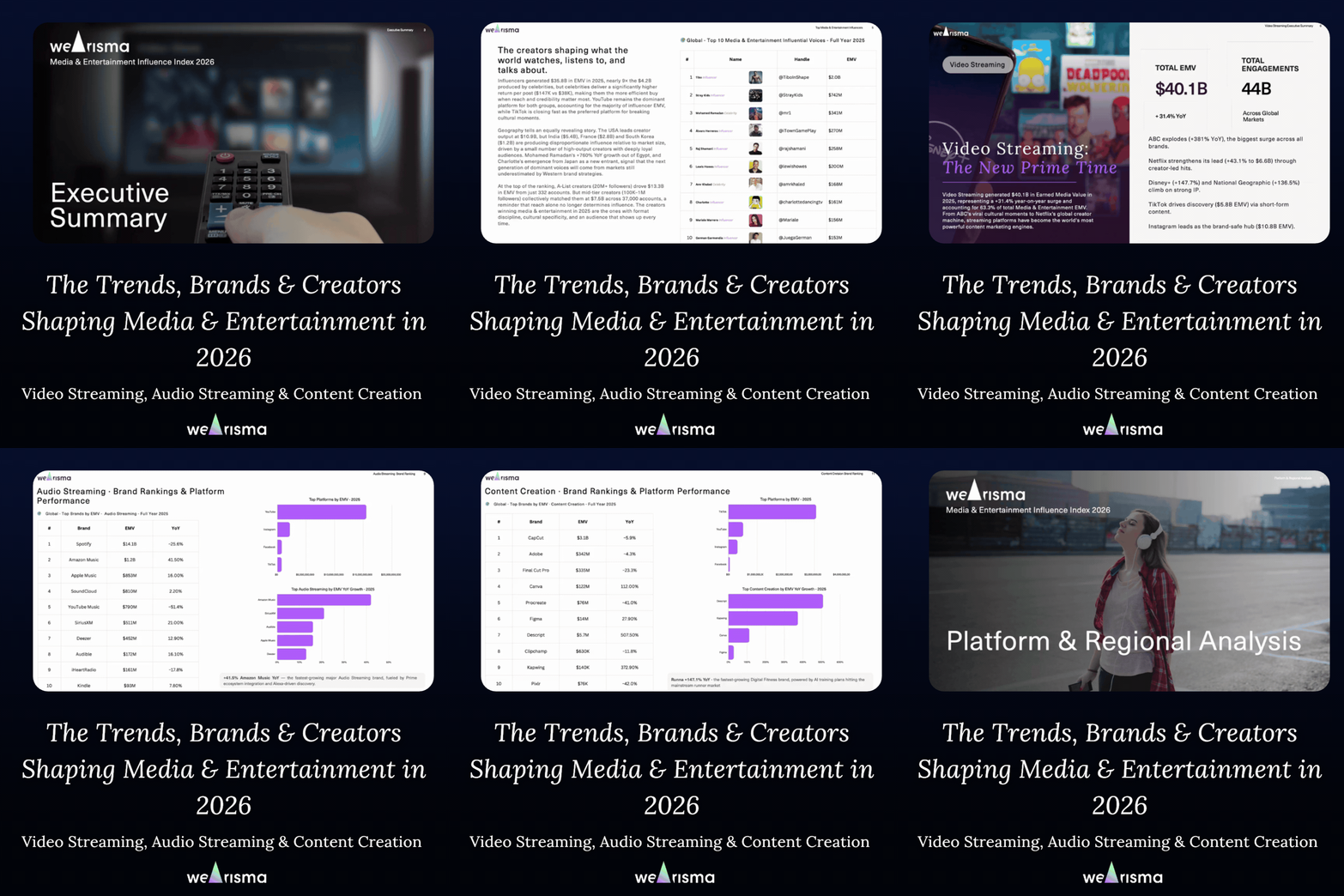
The top 100 media and entertainment brands across video streaming, audio streaming, and content creation generated $63.4B in total Earned Media Value in 2025, up +7.0% YoY. Growth is uneven across sub-sectors, video streaming surged while audio streaming declined sharply, platform dynamics are shifting fast, and a handful of breakout brands are rewriting what influence looks like in entertainment.
TikTok grew +70.2% YoY and is rapidly closing the gap on YouTube as the dominant entertainment influence platform. YouTube remains #1 at $32.6B but declined -11.3%, while Instagram grew +4.4% to $13.3B. Facebook nearly doubled to $7.3B (+98.9%), making media and entertainment one of the few categories where four platforms are genuinely competing for share.
Join our community and get cultural insights, creator strategy guides, and real-world best practices.