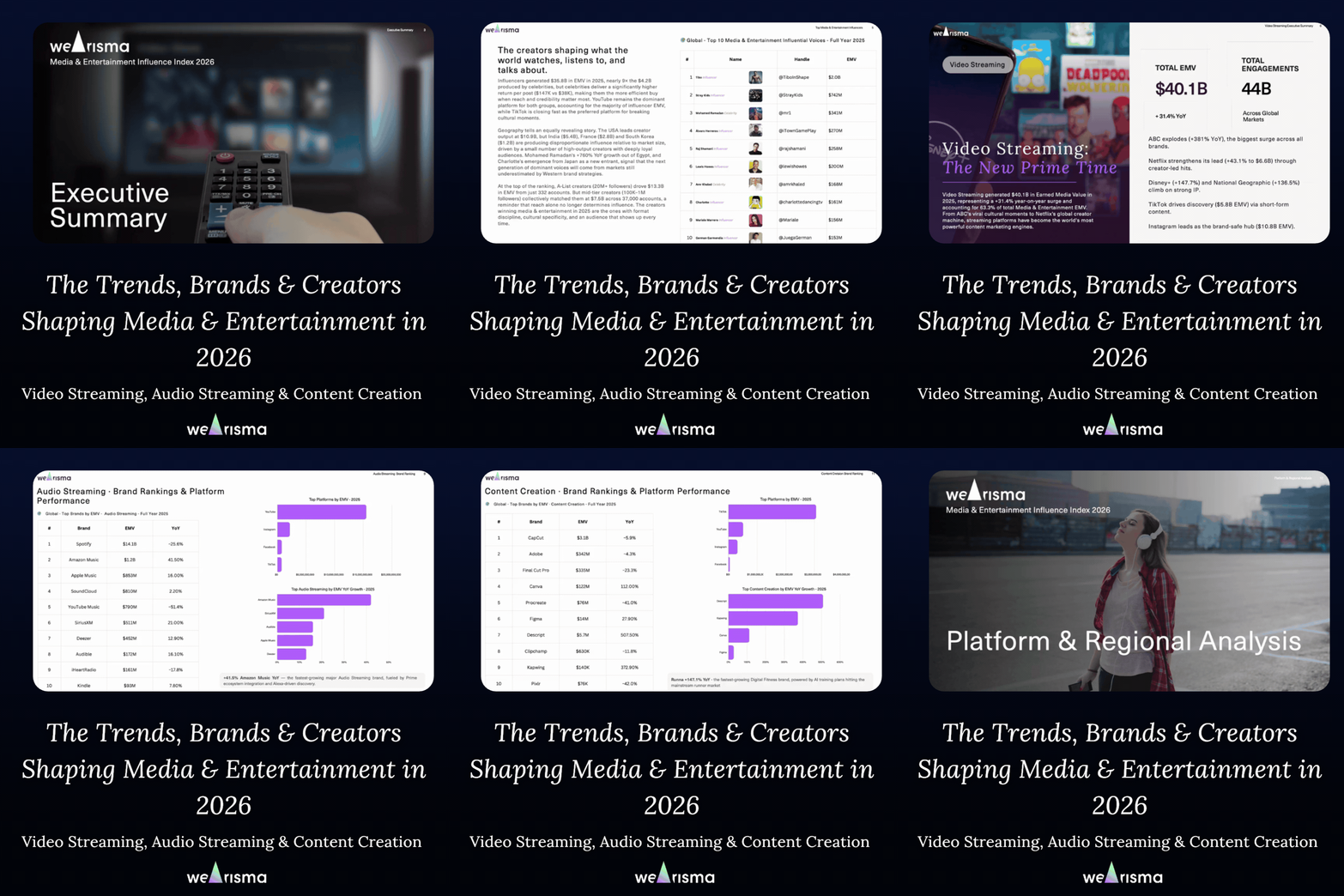
State of Influence Index 2026 now LIVE - Explore the creators, trends and platforms driving conversations
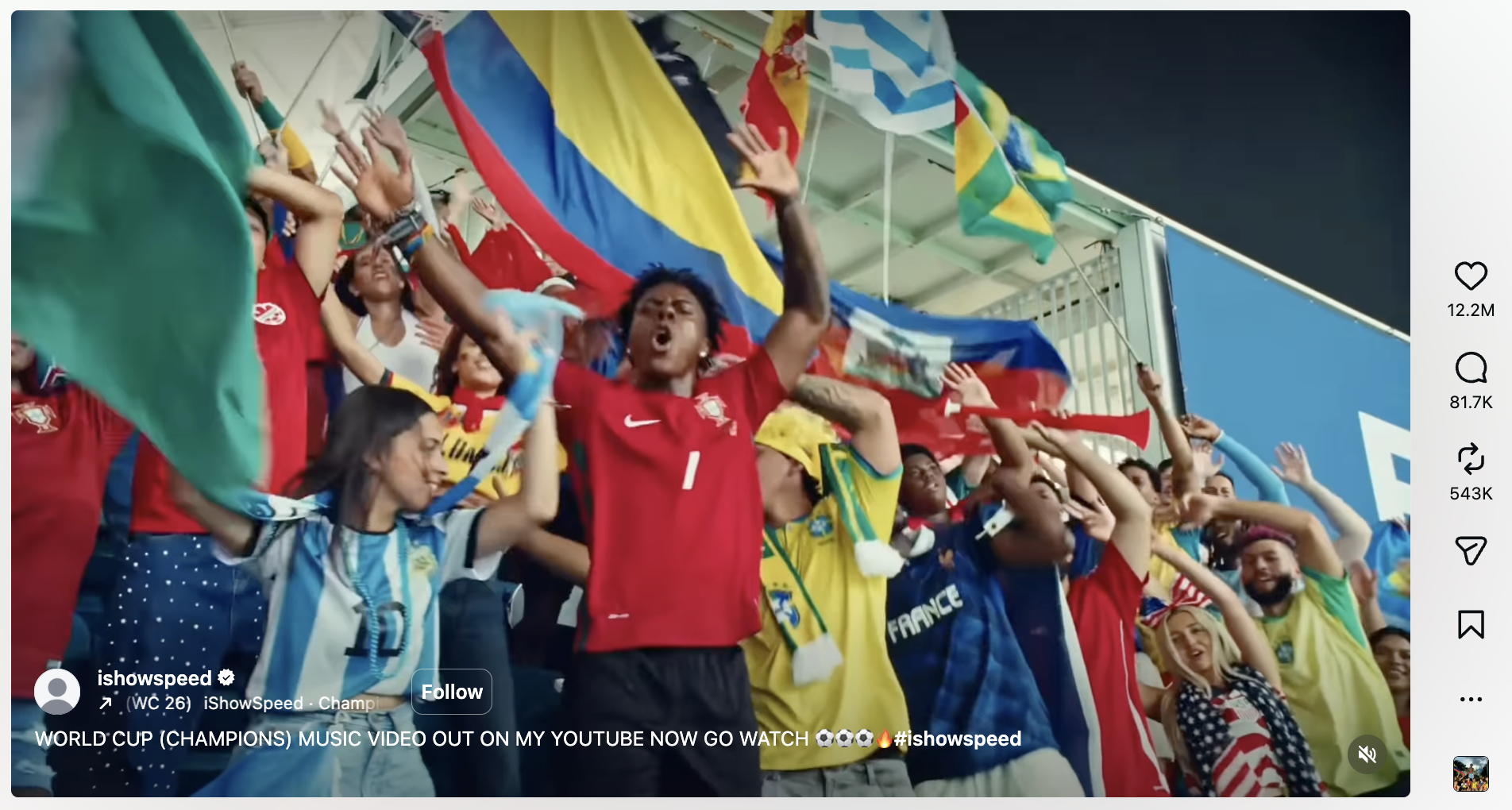
The single biggest individual force of the World Cup was IShowSpeed, working with official tournament access rather than any sponsor. He drove $239M in EMV across the tournament, more than LEGO, the top-ranked brand: match-day livestreams to tens of millions, co-streams with FOX One, and his own “World Cup (Champions)” music video reel worth $17.83M alone. He then made history as the first creator to perform at the Closing Ceremony.
The tournament put its creators front and centre, and they out-earned almost every brand in the field.
Plenty of brands bought their way to the World Cup. Fewer earned their way into the conversation. The ranking below measures each sponsor on the earned media value its campaign generated, organic and creator posts included.
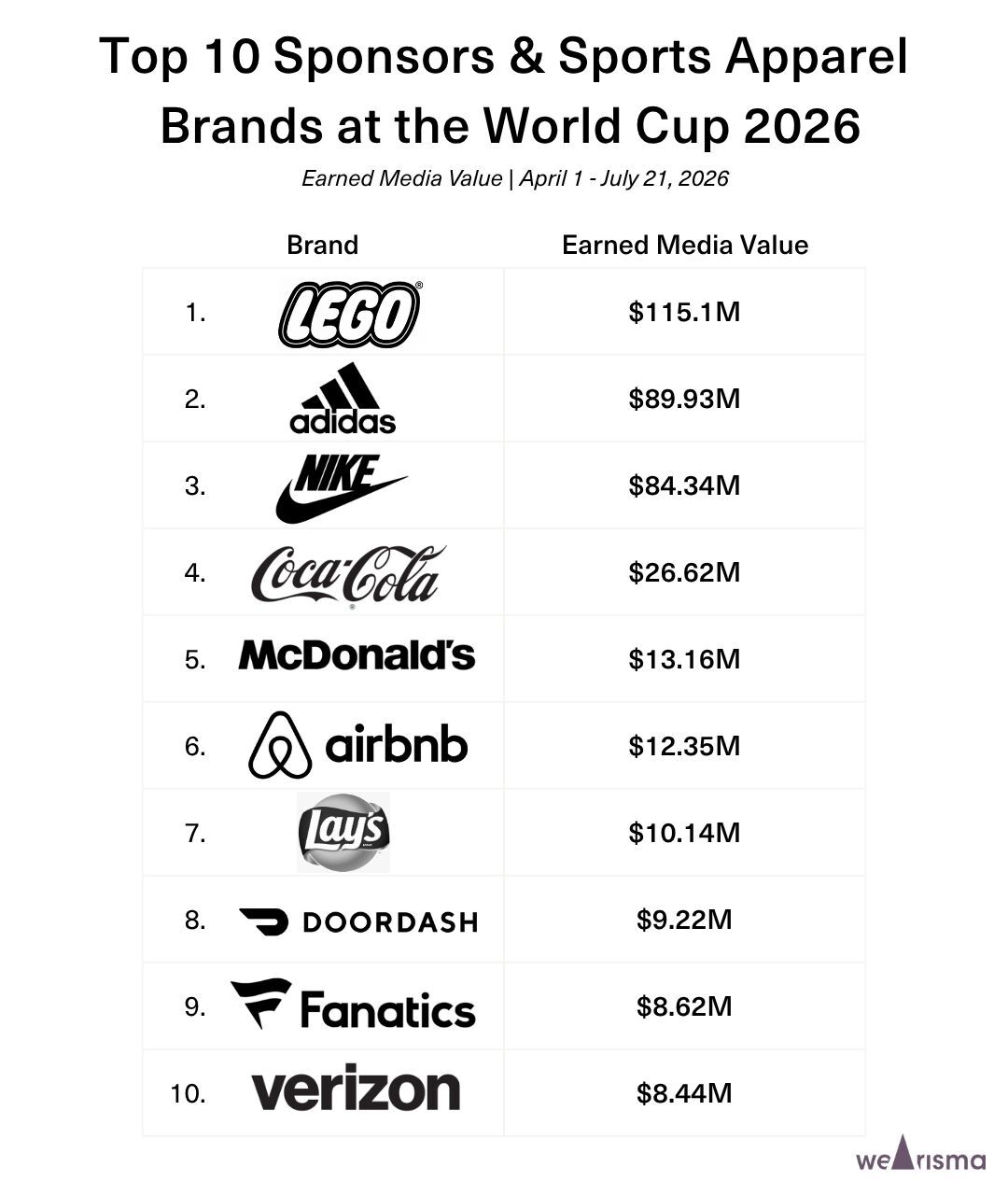
LEGO topped the whole tournament at ~$115M with “Everyone Wants a Piece”, a campaign built on two things budget alone can’t buy. First, it got Messi, Ronaldo, Mbappé, Vini Jr and Kaká, rivals who never share a frame, all building LEGO versions of themselves. Second, in a summer of AI-generated everything, it made the point that this was really them: the hero reel went out tagged #HonestlyItsNotAI. The players posted it from their own accounts, where the reach lives.
Then the fans finished the job. A diamond-studded LEGO World Cup trophy drew $742K in press, a Haaland “Viking cat” LEGO reel $625K, and creators kept rebuilding the Messi and Ronaldo figures themselves, adding a further $13M EMV from organic content.
LEGO launched in early April, months before kick-off, and set a bar no sponsor matched: a campaign people could get involved with and build themselves.
Behind LEGO, the two apparel giants ran the closest contest of the tournament, and each peaked on a single reel.
Lay’s and DoorDash show how creators and organic conversation can amplify a celebrity campaign – and the power of choosing the right talent .
Puma ($2.63M) skipped the hero film. Its sharpest moment was the KidSuper x Christian Pulisic capsule, styled by creator Megan Linke, driving $167.8K EMV in one reel.
Coca-Cola’s $26.62M EMV lands it fourth, ahead of every luxury name, though almost entirely on press social rather than creators. Verizon’s $8.44M came almost entirely from one night: as presenting sponsor of the Final half-time show, it rode the BTS, Shakira and Justin Bieber performances that closed the tournament on 19 July. Diageo’s two tequilas carried its own: Casamigos ($2.12M) ran a “Friendly Rivalry” between Team Classic and Team Spicy, and Don Julio ($603K) toasted the football with “Made to Be Raised”.
@thekatieromero The FIFA World Cup 2026 ™ watch party checklist ad: Custom Casamigos Bottle ✅ margaritas ✅ snacks ✅ good people ✅ I designed my own one-of-a-kind Casamigos bottle on @The Bar US using their AI customization platform. You pick your tequila, answer a few questions, and it generates a custom FIFA World Cup 2026™ design that’s completely yours. No two are the same. If you’re in NY or NJ, you can grab yours on TheBar.com before they’re gone, available through July 19th only. Link in bio. Diageo, New York, NY. Please do not forward or share with anyone under 21. Please Drink Responsibly.
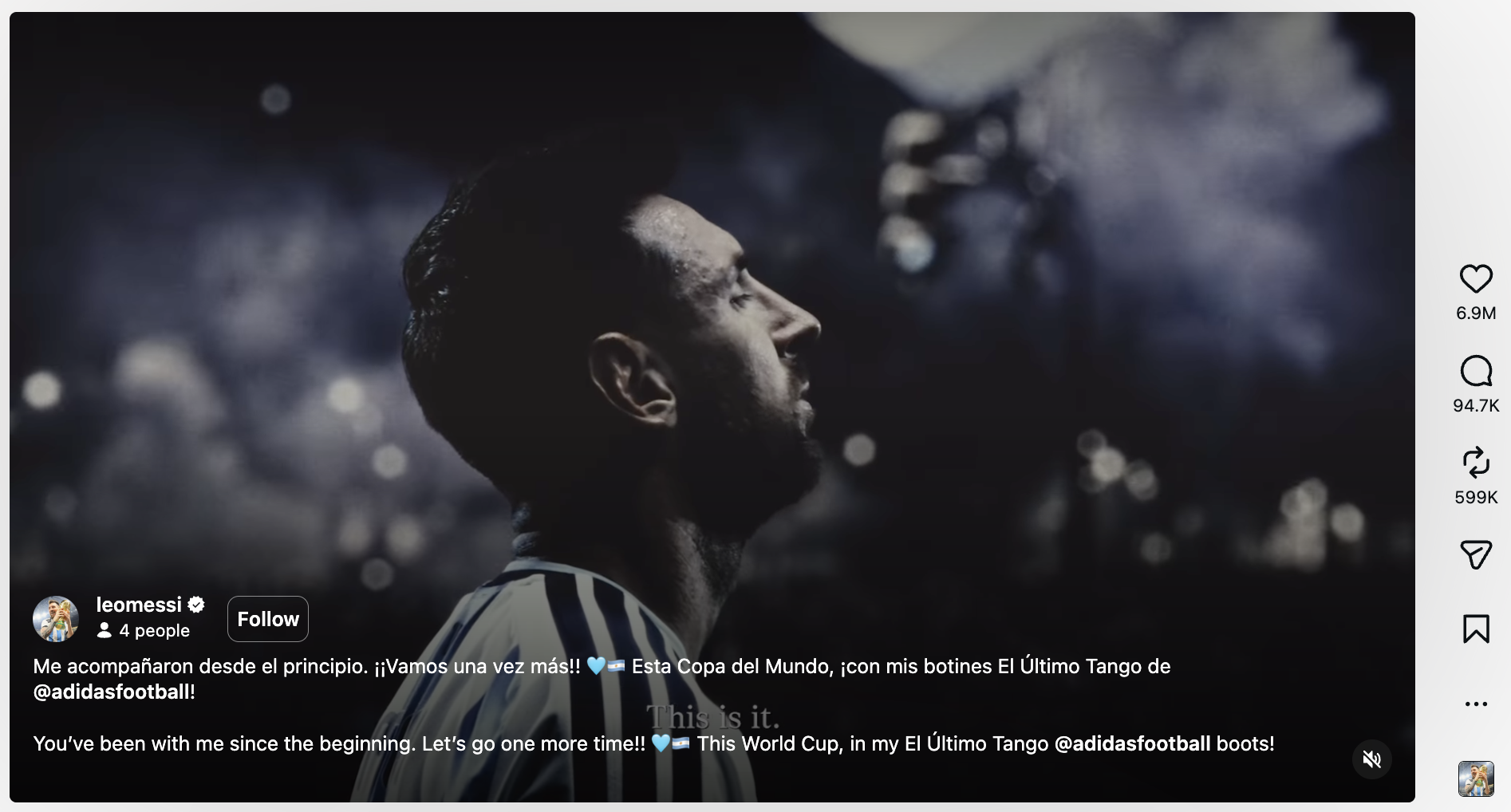
Beckham fronted a dozen brands this tournament, Adidas, Boss, McDonald’s, Pepsi, Lay’s, Stella Artois, Lenovo, Verizon, Home Depot, Nespresso and Ninja among them. He was everywhere, and it cost him.
Beckham is synonymous with football in the US and a brand in his own right, so this isn’t about star power: his EMV was diluted across a dozen brands and rarely carried on his own channels. Even the Adidas reel that tagged him came from Timothée Chalamet’s feed ($1.7M), not his own. But the lesson holds for any brand planning talent spend: a face shared across a dozen logos becomes background. One name carrying a moment for a brand converts far more, and LEGO proved it can carry a whole campaign.
No fashion house’s partnered with FIFA and the category still turned the World Cup into one of its biggest moments of the year. It came through the players: squad arrivals, celebrity sightings and a handful of sharp campaigns, all earned. The ranking below is who captured the most of it.
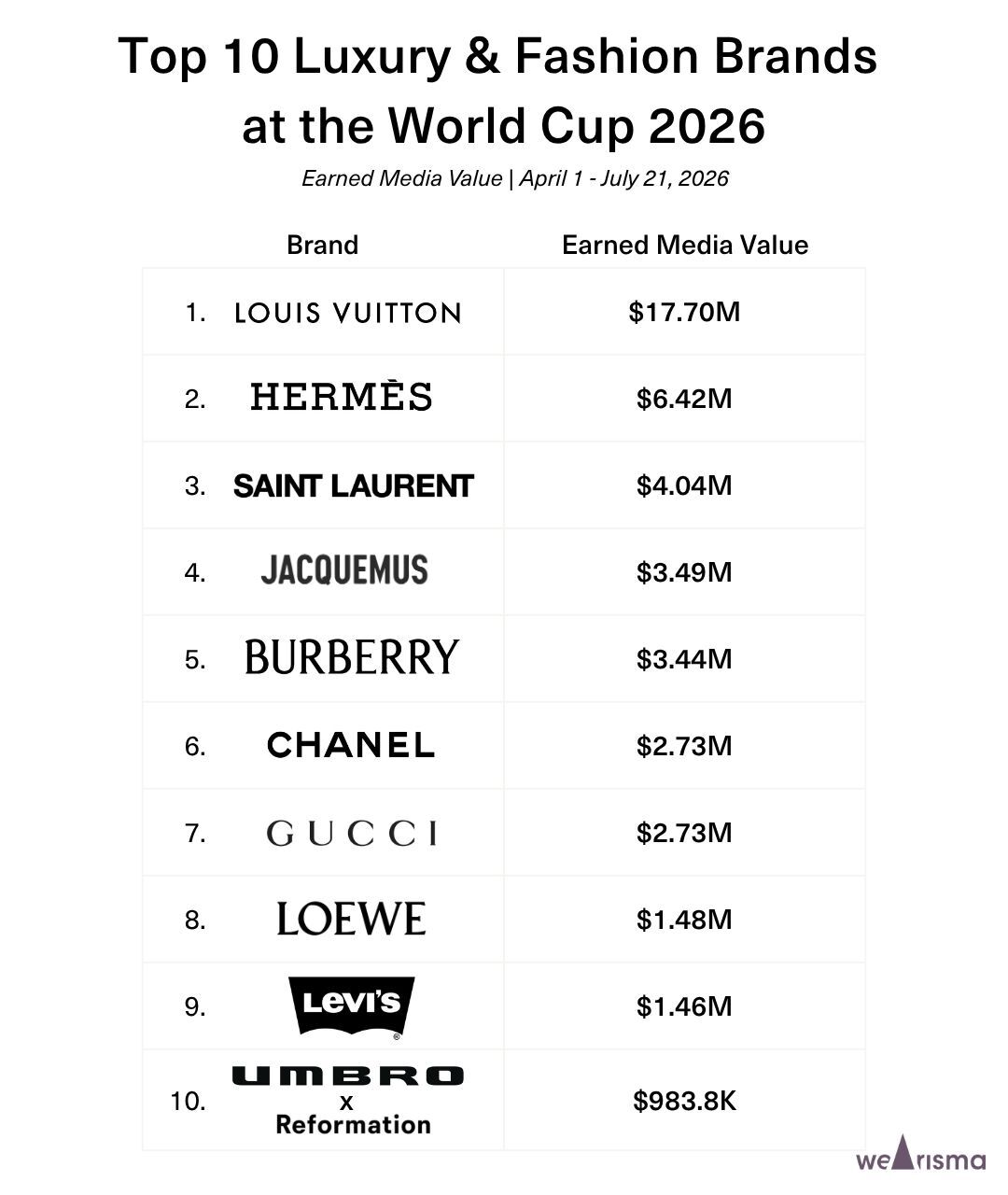
LV topped luxury at $17.70M EMV on a relationship most fans don’t know exists: it has designed the World Cup trophy trunk since 2010 (“Victory travels in Louis Vuitton”). The spike was modern, though. A single Kim Kardashian post for LVxUNICEF added roughly $6M, about a third of the brand’s total.
Hermès ($6.42M) never ran a World Cup campaign. Every dollar of that is organic, and its number-one driver was a single player: Norway’s Erling Haaland became one of football’s most-photographed Hermès collectors.
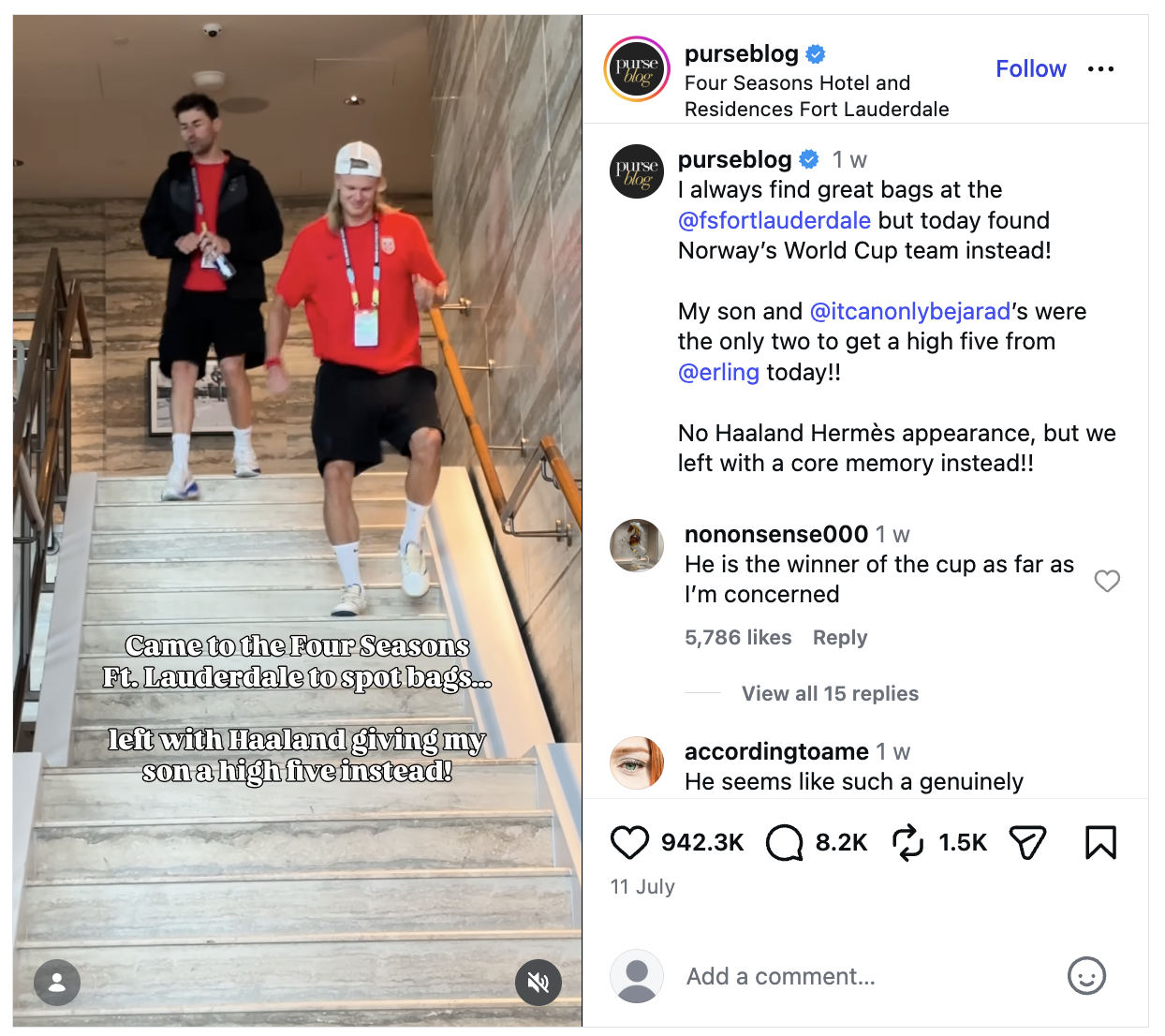
Squad arrivals turned into the tournament’s most-tracked runway, with press and dedicated fan accounts logging which player carried what. For luxury it was the signal worth noticing: men building a personal brand around hero handbags, and the classic icons travelling as far in a football tunnel as on any runway.
France went almost entirely French, and The Fashion Observer and Footballer Fits turned the Le Bourget departure into the viral centrepiece.
@culted Birkins and Chanel? Insane. #teamfrance #worldcup #mbappe #dembele #chanel
Spain, the eventual winners, arrived as Loewe’s official team: Lamine Yamal, Pedri, Pau Cubarsí, Eric Garcia and Alex Grimaldo all in the Loewe XL Amazona 180, the single biggest reason Loewe ($1.48M) ranks at all. Norway’s Erling Haaland made his Hermès a story of its own, and the Netherlands put Virgil van Dijk in a Chanel Large Shopping bag and Memphis Depay in an Hermès HAC 50.
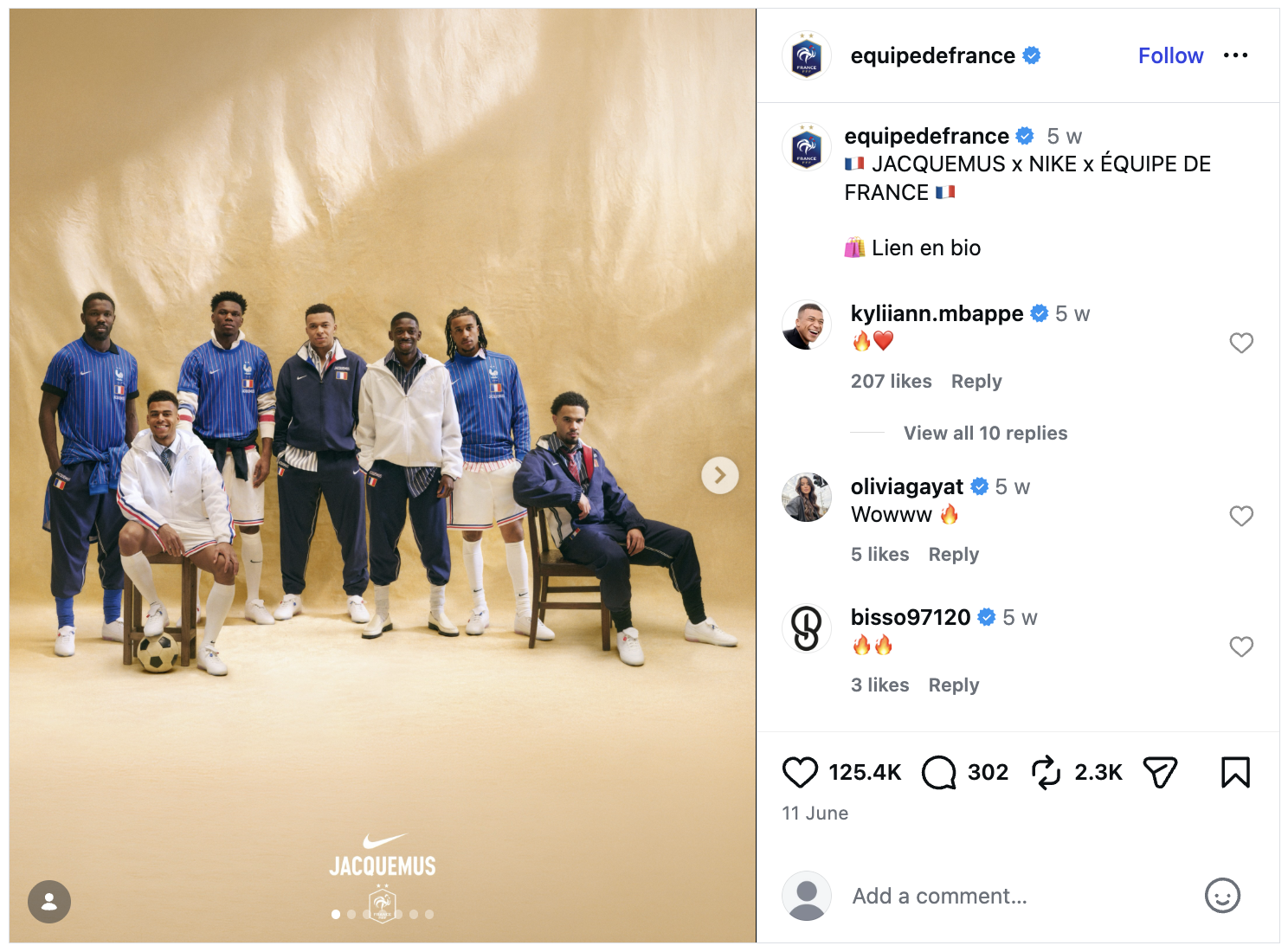
Jacquemus (France, $3.49M) and NOCTA (Canada, $2.19M) led Nike’s “X2” programme on EMV, seven designer capsules across seven countries. The rest kept the programme in conversation in their home markets: PEACEMINUSONE in Korea (with a G-Dragon crossover), Slawn in Nigeria, Virgil Abloh Archives in the USA, Palace in England and Patta in the Netherlands. Press coverage frequently tagged several capsules on the same post, the cross-market conversation Nike designed for.
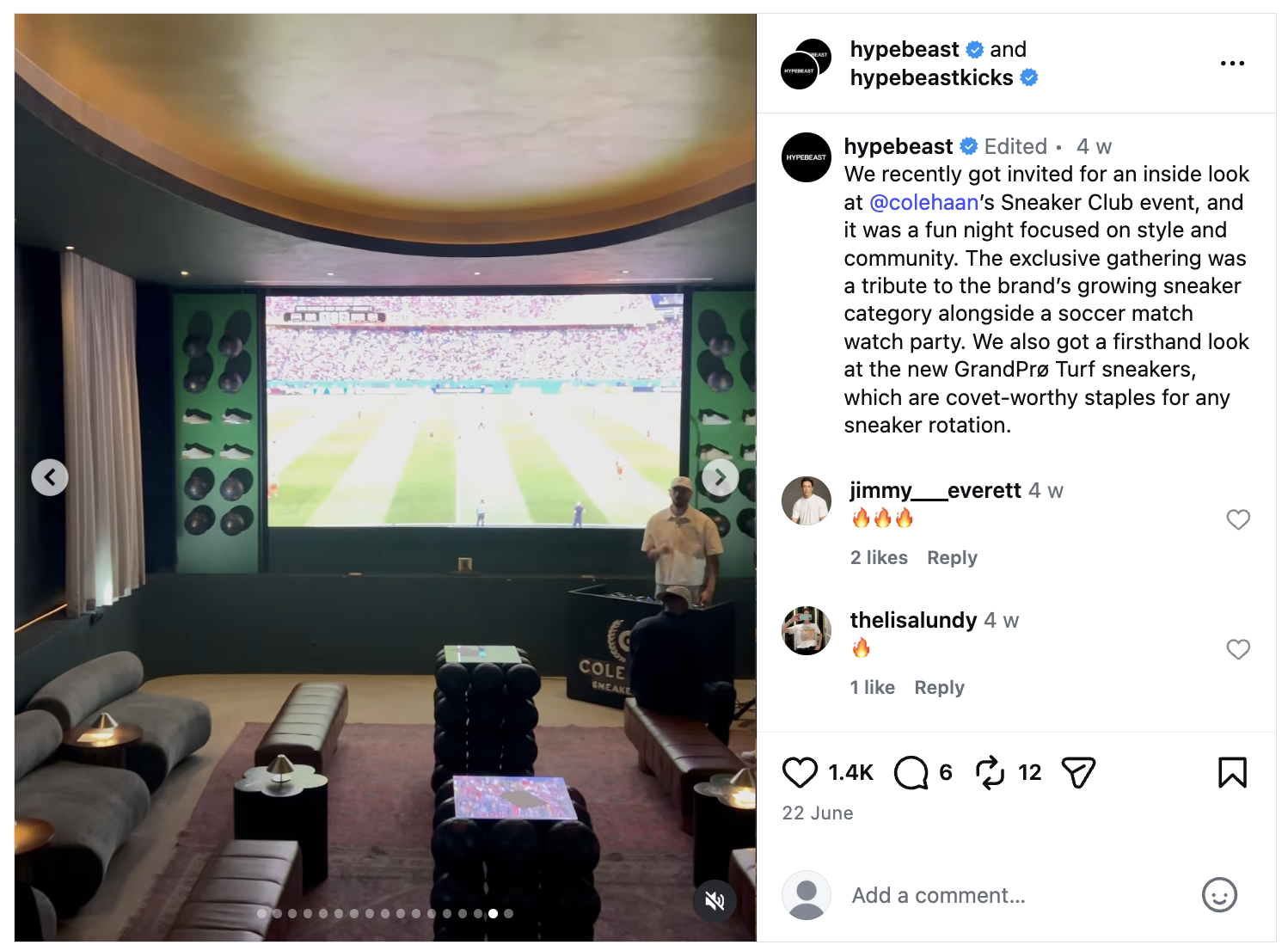
Cole Haan drew a tight, high-value creator moment from one NYC watch party; and Marc Jacobs turned its Dallas NorthPark store into a limited-edition soccer-ball tote drop. Neither ranked on EMV, but both created engaging interactions for creators and fans to take part in.
The winners weren’t the biggest spenders. They were the brands that got fans and creators posting for them. LEGO topped the tournament by getting five rivals into one campaign and letting them post it on their own channels. Louis Vuitton and Hermès, neither a FIFA sponsor, out-earned most of the official partners on the pitch. The Haaland bags, France’s airport arrivals, Levi’s logo workaround, Tom Brady’s Fanatics post: every one was amplified by fans and creators.
What our data keeps showing is simple: influence now lives in what fans and talent create, not in what a brand can place. Back one athlete and one real moment over a logo scattered across the tournament, and 2030 will look the same.