State of Influence Index 2026 now LIVE - Explore the creators, trends and platforms driving conversations
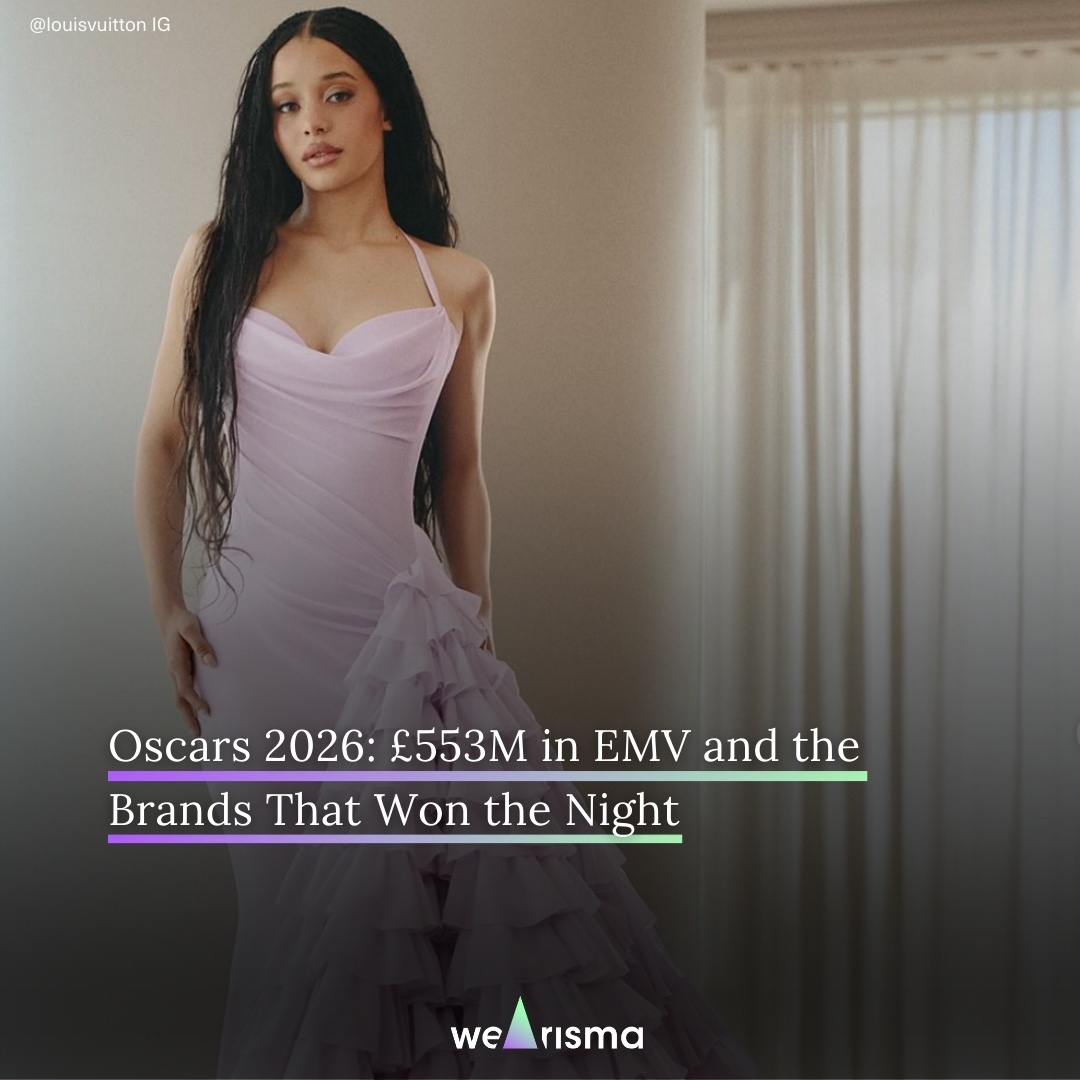
What sets the Academy Awards apart from other fashion moments is its depth of cultural context, and the data reinforces it.
Unlike the Met Gala, driven by spectacle, or fashion weeks, shaped by industry insiders, the Oscars sit at the intersection of global broadcast, award-winning storytelling and editorial authority.
In 2026, this translated into £553M in EMV and 2.23 billion in reach within the first 24 hours (15–16 March) – driven by a uniquely concentrated moment of global attention.
Every look is not just styled, it is contextualised within a broader narrative of achievement, artistry, and legacy.
This is why a single appearance can travel so far.
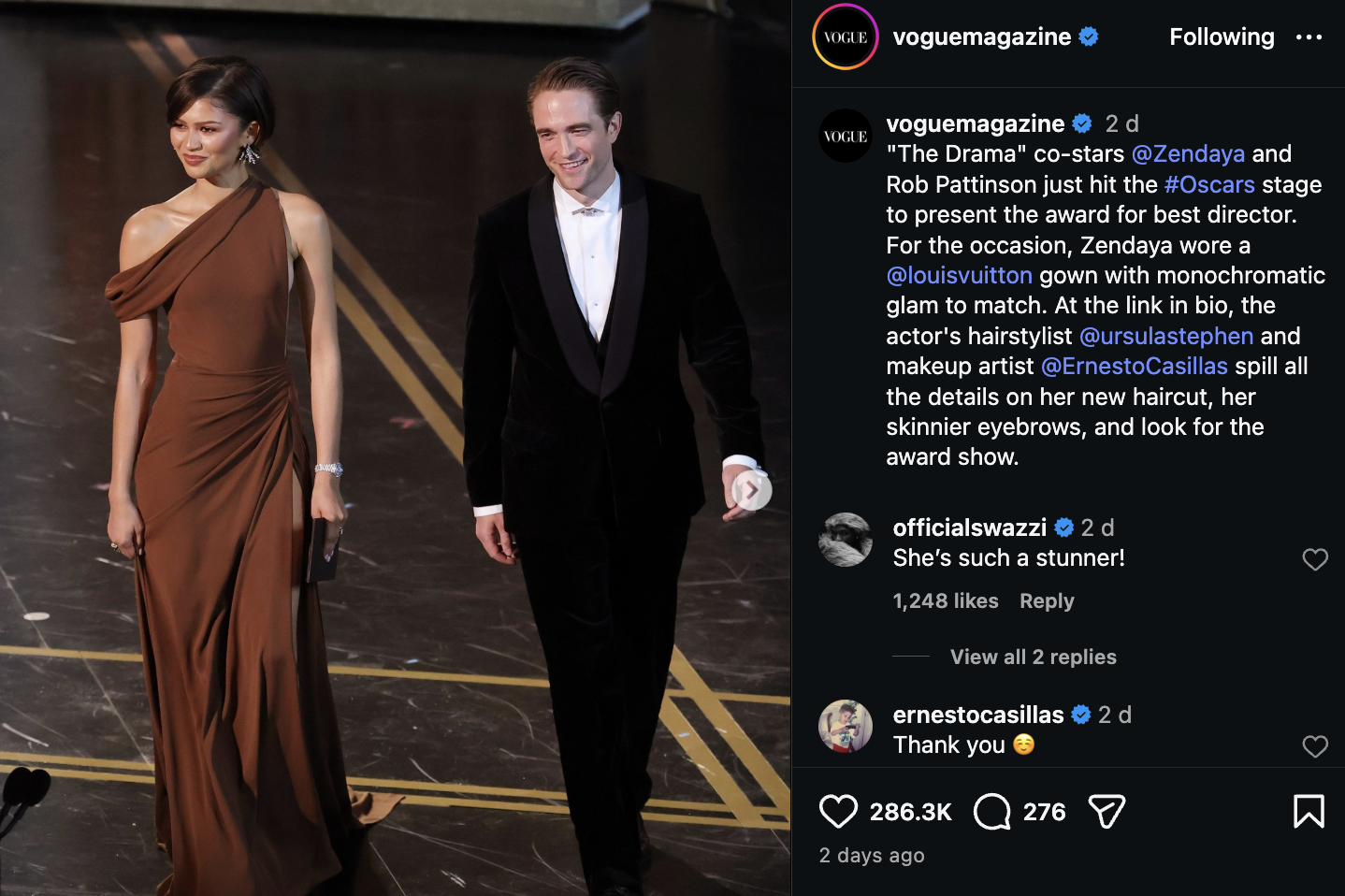
When Jessie Buckley stepped onto the stage to accept Best Actress in a custom Chanel gown inspired by Grace Kelly, the moment extended far beyond fashion coverage into global headlines. When Zendaya appeared unexpectedly to present Best Director in Louis Vuitton, it became one of the most talked-about broadcast moments of the night. And when Chase Infiniti, fresh from One Battle After Another’s six-award sweep, arrived in a Louis Vuitton gown requiring 750 hours of craftsmanship, the story of the dress became as powerful as the look itself.
These are not isolated moments, they are catalysts for amplification.
The Oscars create a multiplier effect, where award wins, celebrity relevance, and brand alignment converge, pushing fashion into mainstream media, entertainment coverage, and global conversation. This is what transforms a red carpet placement into measurable value.
In fact, for the leading brands of the night, including Louis Vuitton, Chanel and Valentino, over 95% of total EMV was driven by press coverage. Louis Vuitton alone saw 97.05% of its £11.2M EMV come from editorial, while Chanel reached 98.54% press-driven impact.
At a time when many luxury events are increasingly social-first, the Oscars remain one of the last truly editorial-first platforms, where heritage, craftsmanship, and cultural relevance are not only visible, but amplified at scale.
Against this backdrop, a clear group of brands emerged as the night’s most influential players, those who not only secured visibility, but converted it into measurable value.
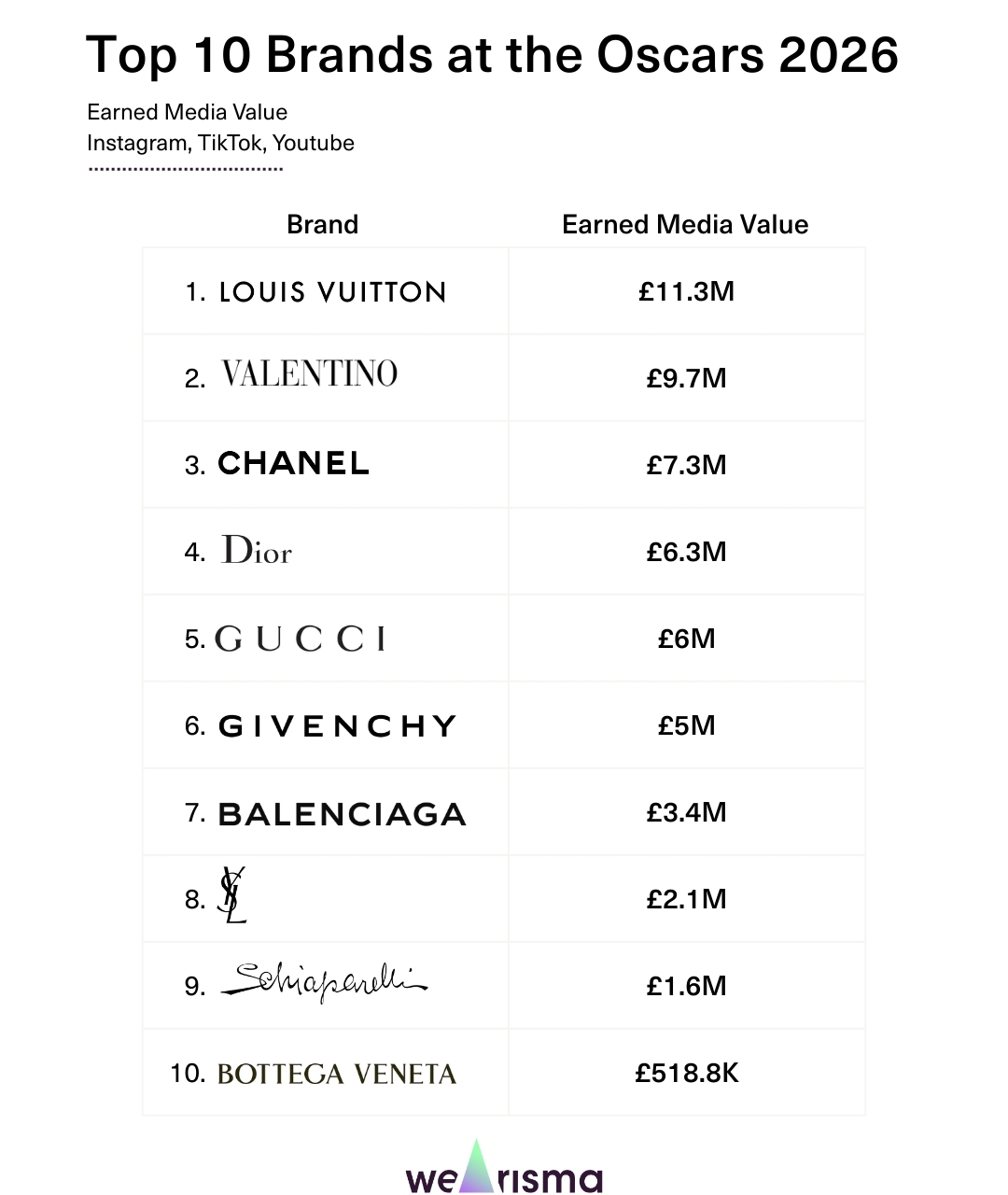
Louis Vuitton (LV) is the undisputed leader of the Oscars 2026, generating £11.3M in EMV and delivering one of the most strategically executed red carpet takeovers of the evening.
The maison dressed an extensive roster including Emma Stone, Zendaya, Chase Infiniti, Wunmi Mosaku, Renate Reinsve and Michael B. Jordan, ensuring consistent visibility across both broadcast and press. This scale translated into dominance, with 97.05% of impact driven by editorial coverage.
Key cultural moments amplified this further. Chase Infiniti, whose film One Battle After Another won six awards, became a focal point of global coverage in a Louis Vuitton gown requiring 750 hours of craftsmanship. Zendaya’s surprise appearance presenting Best Director created one of the night’s most talked-about broadcast moments, while Michael B. Jordan’s presence, linked to Sinner’s four wins, reinforced the brand’s alignment with award-winning cinema.
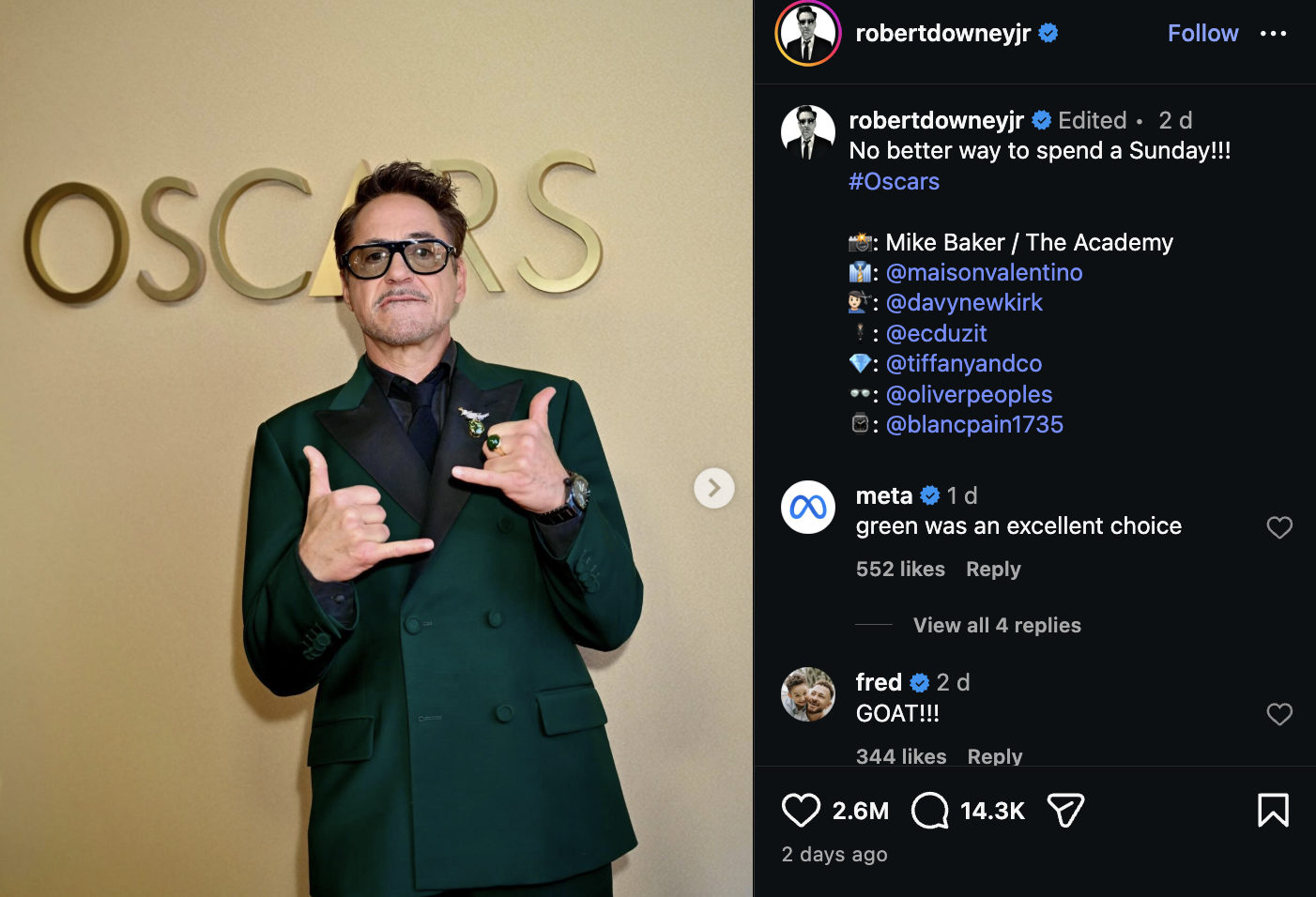
Valentino emerged as one of the most culturally resonant brands of the night, combining strong red carpet visibility with high-performing owned media.
The brand’s defining moment came through Robert Downey Jr., whose Instagram post alone generated £2.9M in EMV, demonstrating the power of talent-led amplification in extending red carpet impact beyond traditional channels.
Alongside this, Anne Hathaway’s appearance in Valentino drove significant editorial coverage, reinforcing the house’s enduring association with Hollywood glamour. Under Alessandro Michele, Valentino continues to balance heritage with contemporary cultural relevance, an approach that proved particularly effective on a night where both dimensions matter.
Chanel generated £7.3M in EMV, with 98.54% of its impact driven by press, highlighting the continued importance of editorial storytelling for heritage maisons at the Oscars.
The brand dressed a high-profile lineup including Nicole Kidman, Kendall Jenner, Teyana Taylor and Gracie Abrams, securing consistent global coverage. Its most defining moment, however, came through Best Actress winner Jessie Buckley, who wore a custom Chanel gown inspired by a design famously worn by Grace Kelly.
This combination of cinematic success and archival reference created a powerful narrative for media, demonstrating how heritage, when activated through the right talent, remains a key driver of EMV.
@voguemagazine #kendalljenner was all smiles and all style in custom #Chanel at the 2026 #VFOscars party. Tap the link above to see all of tonight’s arrivals.
Dior’s £6.3M EMV performance was driven not only by red carpet presence, but by a more expansive content strategy that extended into behind-the-scenes storytelling.
A standout moment came from #kpopdemonhunters star Ejae, whose final fitting with Dior, captured by Vogue, generated £806K in EMV across TikTok and YouTube. Notably, a single YouTube video delivered £324K, reinforcing the growing importance of long-form content in luxury.
This aligns with a broader shift: while YouTube currently represents a smaller share of Media Value, it was one of the fastest-growing channels at New York Fashion Week, with +184% year-on-year growth. Dior complemented this with strong red carpet visibility, including appearances such as Rose Byrne, ensuring a balance between editorial and digital impact.
@voguemagazine Ahead of tonight’s ceremony, #kpopdemonhunters star @ejae_k invited us to her #FinalFitting with @Dior for the 2026 Oscars. Watch the full episode at the link in our bio.
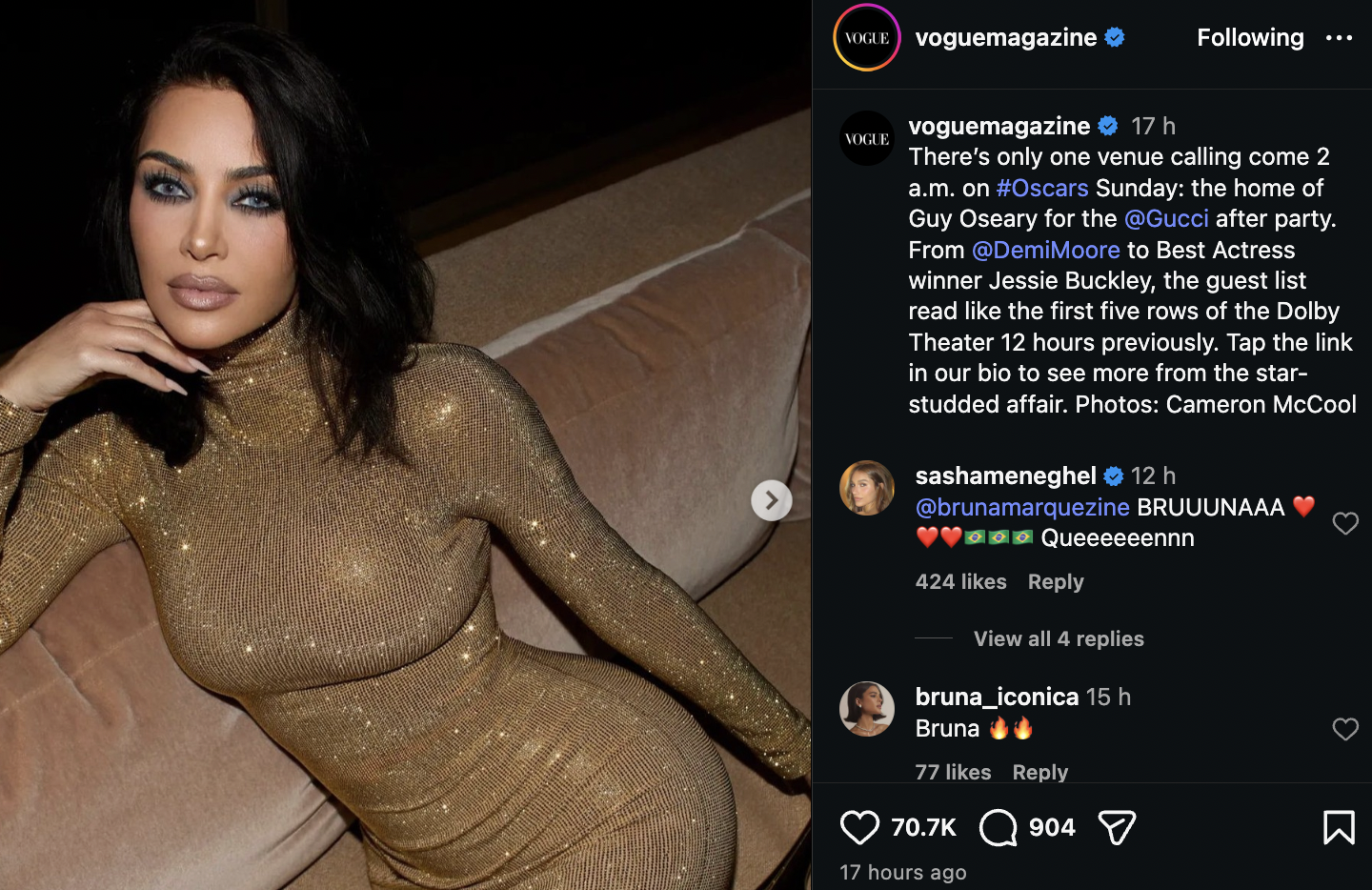
Gucci generated £6.0M in EMV, driven by a strategy that extended beyond the main ceremony into the Vanity Fair Oscar after-party, an increasingly critical moment for brand visibility.
Kim Kardashian’s appearance in a gold Gucci gown became a major focal point of press coverage, while Bruna Marquezine contributed to red carpet visibility. Karlie Kloss further amplified the brand through owned media, with her Instagram post generating £175K in EMV.
Gucci’s performance underscores the importance of treating the Oscars as a multi-stage event, where after-parties offer additional opportunities to capture attention and drive media value.
Givenchy generated £5.0M in EMV through a well-balanced presence across both the ceremony and after-party circuit.
Timothée Chalamet’s red carpet appearance in Givenchy secured strong editorial coverage, reinforcing the brand’s positioning within modern menswear. This visibility extended into the evening through appearances from Elle Fanning and Kaia Gerber at the Vanity Fair Oscar Party.
By maintaining presence across multiple touchpoints, Givenchy demonstrated how sustained visibility throughout the event lifecycle can translate into consistent EMV performance.
@voguespain #TimothéeChalamet ha apostado por un total look white de #Givenchy para los Oscars. ¿Se llevará hoy el premio a Mejor actor? 🤍 #Oscars2026
This year’s surge in EMV was not incidental. It was driven by a convergence of factors that elevated both the ceremony and its fashion moments.
A strong slate of award-winning films created a powerful halo effect around the talent in attendance. As titles like One Battle After Another and Sinner dominated the awards, the actors associated with them became focal points of global attention, bringing the brands dressing them into the spotlight.
At the same time, the scale of celebrity attendance remained exceptionally high, with both established icons and next-generation stars contributing to a diverse and highly visible red carpet.
Crucially, press coverage intensified. The Oscars remain one of the few events where editorial still leads the narrative, accounting for the vast majority of EMV generated. In contrast to more social-first moments, this is a space where heritage, craftsmanship, and storytelling are not only relevant, they are amplified.
Layered on top of this was a growing sophistication in content. From behind-the-scenes fittings to long-form video storytelling, brands are expanding how they show up around the Oscars, creating a richer, more immersive experience that drives deeper engagement.
For luxury brands, the significance of the Oscars goes beyond scale.
This is one of the last remaining cultural moments where prestige and mass attention coexist. It is where heritage houses reinforce their legacy, while simultaneously engaging new, global audiences.
To be present on this red carpet is to be part of a broader cultural conversation, one that spans film, fashion, and identity. To be successful, however, requires more than placement. It demands alignment: with the right talent, the right narrative, and the right moment.
Because at the Oscars, visibility alone is not enough. What matters is meaning.
In an increasingly fragmented landscape, the Oscars remain a rare constant: a moment where attention consolidates, narratives crystallise, and brands have the opportunity to shape how they are seen on a global stage.
The 2026 ceremony makes one thing clear.
While the channels may evolve, the power of the red carpet, when executed with precision and purpose, remains as strong as ever.
For luxury fashion, the Oscars are not just another event in the calendar. They are the moments where image becomes influence.