State of Influence Index 2026 now LIVE - Explore the creators, trends and platforms driving conversations
It’s nearly the end of the year; a reflective time, where we take stock of everything we’ve accomplished thus far. Here at Wearisma, we’ve utilised intelligent data to provide a complete list of the top brands in Beauty, Fashion and Luxury who have conquered Influencer Marketing in four countries (US, UK, Japan and France) in 2018. In this post we’ve revealed the most popular Luxury brands in the UK. By combining this data with in-depth analysis, we’ve been able to reveal their successful strategies and give insights into the techniques that you should be using in 2019 and beyond!
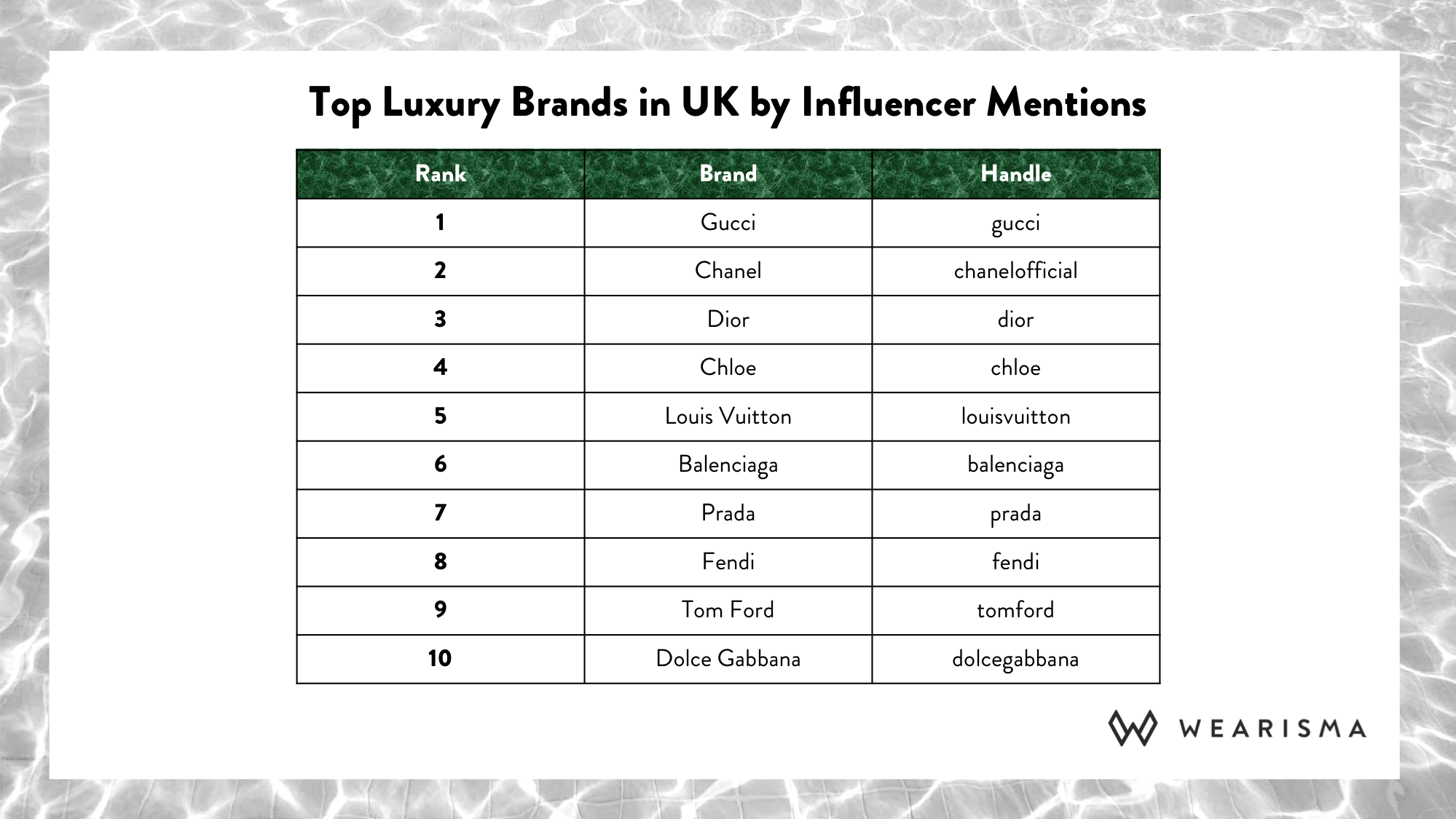
As highlighted in Wearisma’s and Walpole’s ‘The State of British Luxury Influence’ white paper, in the UK, Gucci is the top most mentioned Luxury brand. Gucci’s online success has been down to the brand posting entry-level products (content which the brand themselves defines as ‘Traffic Building’) and focusing on a niche set of micro-influencers.
Dior on the other hand has secured the third place position by adopting an integrated approach; working with both micro and mega influencers. Balenciaga’s conscious decision to focus on innovation within its social media strategy is arguably one of the reasons the brand features on this list. Moving on from traditional influencer marketing, Balenciaga worked with digital artist Yilmaz Sen (@yilmazsen) For their SS19 Instagram campaign to create content with a new set of influencers of the CGI (computer-generated imagery) variety.