State of Influence Index 2026 now LIVE - Explore the creators, trends and platforms driving conversations
It cannot be denied that Instagram is still an important force for many brands. The beauty community on Instagram contains up to 200 million fans, making up 25% of the whole of Instagram’s community according to Digi Day.
One of the biggest conversations this year has been about the impact of Instagram’s new algorithm on influencer marketing but more specifically, whether it has affected the engagement levels of content. Many influencers have expressed seeing a huge drop in their engagement levels for their posts due to the Instagram feed changing from chronological order in favour of the most engaged posts.
For this reason, Wearisma’s data scientists have investigated the engagement levels of beauty influencers in the UK across January to September 2017 and 2018 to see how significant the impact has been.
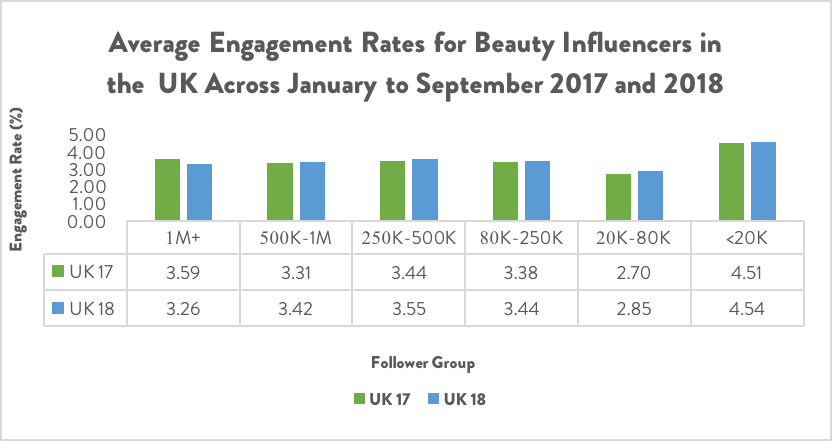
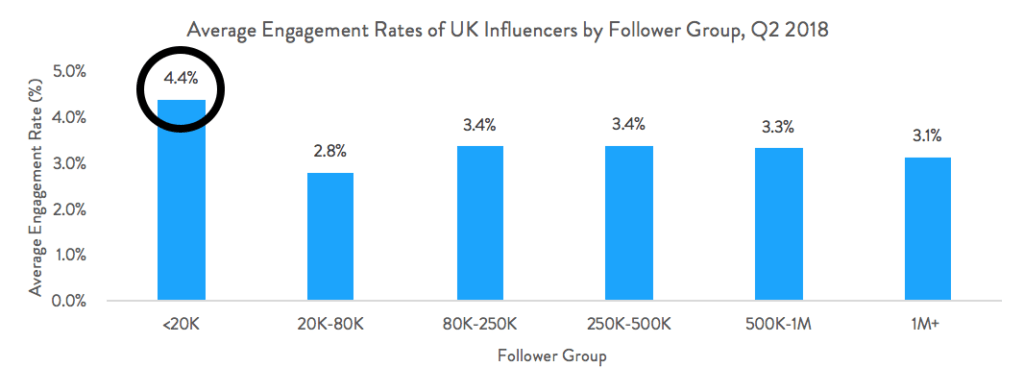
Despite there being heavy changes to the Instagram algorithm over the past year, our data suggests that influencer engagement across all follower groups within UK beauty has stayed constant and there has been very little documented difference between 2017 and 2018.
Our data demonstrates the grouping with the highest engagement rate to be the micro influencers (<20k followers). The average engagement rate for this grouping is 4.54% for January to September 2018, which is over 1% higher than the other groupings. Working with influencers from this bracket is not only likely to command a lower fee, but it is also probable to generate more of an impact in terms of content engagement than others.
Engagement rates show how receptive the audience is to an influencer’s work and differs post to post, depending on many variables some of which are the content and language used. This can also be used to show the level of “trust” that has been built up between the influencer and the audience as the audience value their honest opinions and thoughts, differing to more traditional advertising methods where little opinion or thought on the product is given.
Furthermore, this hones in the fundamental need for emphasis on authenticity when collaborating with influencers. This encompasses the way the collaboration is sculpted, which influencers are picked and whether their audience is interested in the content as these are all factors that will impact the engagement of partnerships. Beyond this, there are also further details such as the language influencers use, the time posted, other brand collaborations and much more that will impact engagement rate far more than just the Instagram algorithm changes.
The engagement levels of beauty influencers content staying level is a positive sign that content is still being well received by audiences across Instagram. From this, it could be reasoned that ahead of the festive period, this quarter is a positive time to invest in your influencer marketing strategy.