What Proportion of Influencer Content is an Ad?

Analysis of UK Instagram influencers reveals that while many influencers do post sponsored content, it constitutes only a small fraction of their overall posts, with an average of just 2% being sponsored. Despite concerns about ad saturation, consumer fatigue may stem more from misalignment between content and influencer values rather than the volume of sponsored posts.

Published On: October 18, 2018

Insights into Influencer Sponsored Content Saturation in the UK

With recent articles popping up on how much influencers are paid to generate sponsored content, it may explain why it may seem like our feeds are increasingly looking like a steady string of ads.

Taking a deeper look at Instagram influencers in the UK, we pulled a sample of content creators who have posted sponsored content between January and September of this year to identify the proportion of content that was sponsored.
Wearisma Insight

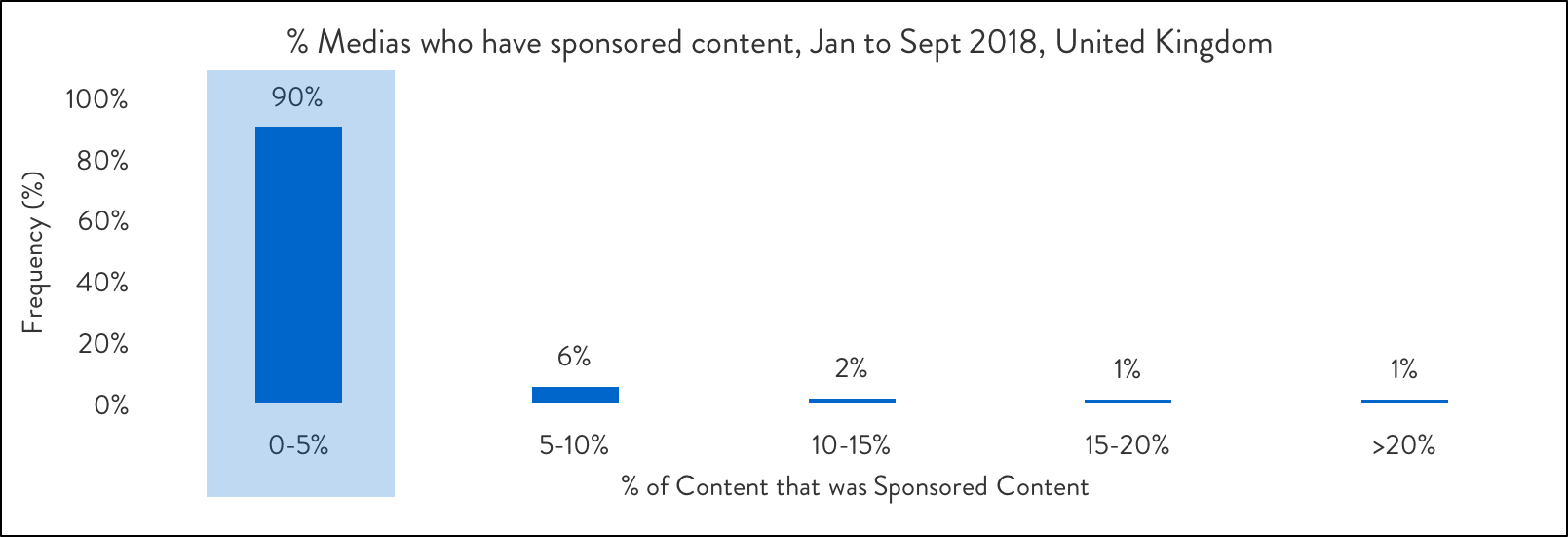
We found that the 90% of influencers who post sponsored content have between 0 and 5% sponsored content. So only 1 in 10 influencers who post sponsored content have >5% of their feed containing sponsored ads. On average only 2% of an influencer’s posts were sponsored.
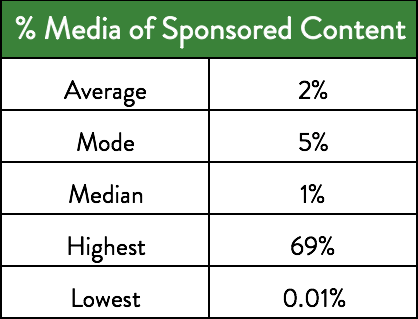
This is interesting given the recent conversation around Influencer ad saturation. For instance, Bazaarvoice commissioned research into the attitudes of consumers and found that 47% of consumers felt “fatigued” by repetitive sponsored posts. It’s no secret that placing a strong emphasis on authenticity and relationship-building is key to finding success in influencer marketing. Users may not be tired of sponsored content but rather content that does not align with the influencers brand and beliefs.

Resources

Stay Ahead with the Latest Creator Economy Intelligence

Access timely cultural trends, strategic creator guidance, and industry best practices.

Cannes Lions 2026: The Creator Marketing Questions Every CMO Will Be Asking

Cannes Lions has always been where the industry takes stock, not just of the work, but of where the money is going and why. This year, creator marketing will be front and centre. Not because it’s new, but because the ground underneath it is shifting in ways that are forcing brands to fundamentally rethink how they plan, measure and value creator partnerships. 

Here are the three topics we expect to define the week.

Media & Entertainment Influence Index 2026

The top 100 media and entertainment brands across video streaming, audio streaming, and content creation generated $63.4B in total Earned Media Value in 2025, up +7.0% YoY. Growth is uneven across sub-sectors, video streaming surged while audio streaming declined sharply, platform dynamics are shifting fast, and a handful of breakout brands are rewriting what influence looks like in entertainment.

TikTok grew +70.2% YoY and is rapidly closing the gap on YouTube as the dominant entertainment influence platform. YouTube remains #1 at $32.6B but declined -11.3%, while Instagram grew +4.4% to $13.3B. Facebook nearly doubled to $7.3B (+98.9%), making media and entertainment one of the few categories where four platforms are genuinely competing for share.


Beauty Influencer Marketing Benchmarks for 2026

The Beauty Influencer Marketing Benchmark Report: Engagement Rate, Earned Media Value, and Defining What “Good” Looks Like in 2026

Coty: Client Success Story

Stay Ahead with WeArisma Intelligence

Join our community and get cultural insights, creator strategy guides, and real-world best practices.

  • See who’s shaping culture, and how.
 
  • Access practical guides and strategy tools.
 
  • Understand how top brands are growing ROI and productivity.
 
  • Read expert takes on what’s next.

Join the Community