🎉 WeArisma joins forces with NielsenIQ (NIQ) to, for the first time ever, measure the impact of Creator Marketing on sales.

Winners of The Grammys 2026 (Brands)

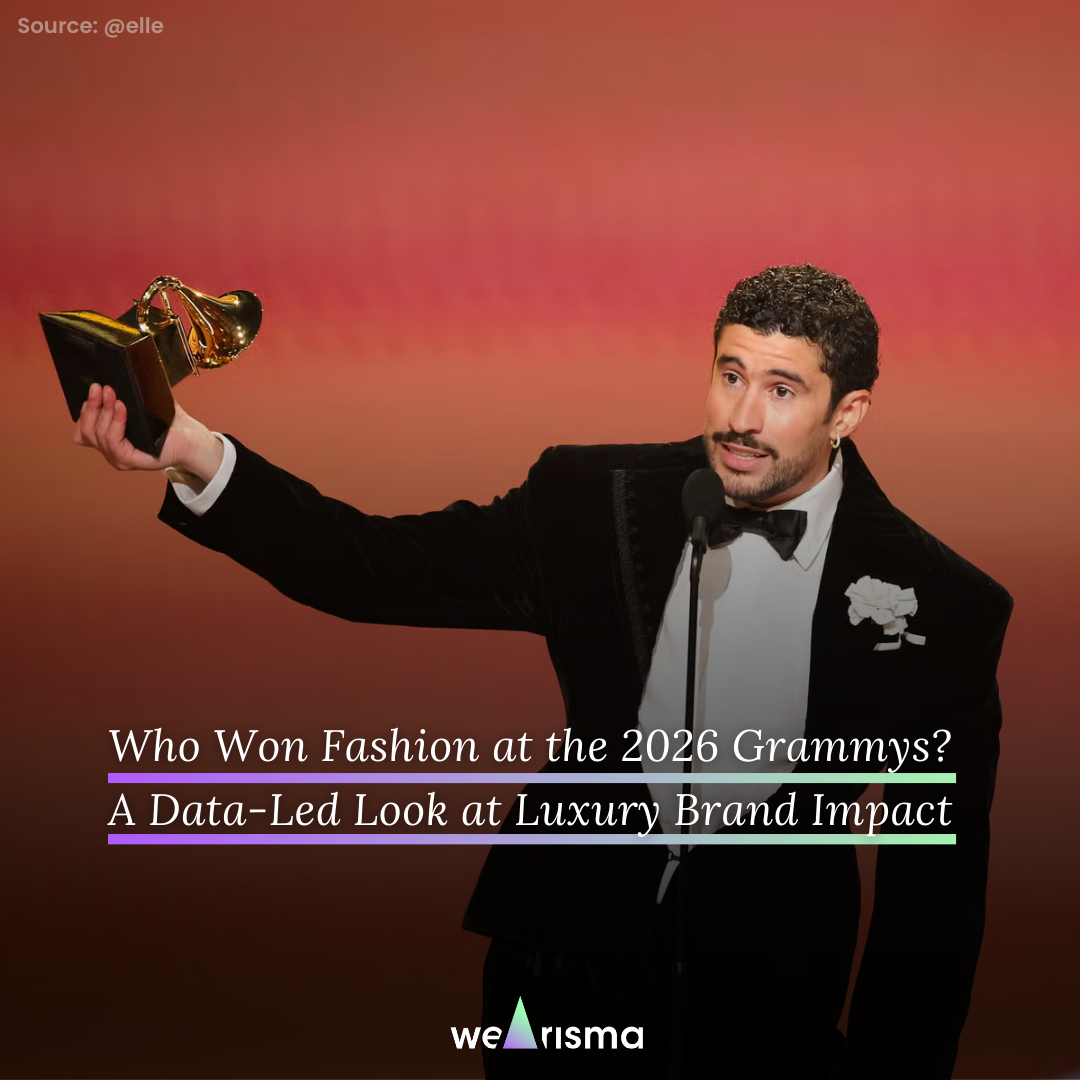
A data-led breakdown of how Valentino, Saint Laurent, Schiaparelli and Mugler dominated EMV, engagement and reach at the 2026 Grammys.

Published On: February 6, 2026

The 2026 Grammys saw a +28% year-over-year increase in EMV


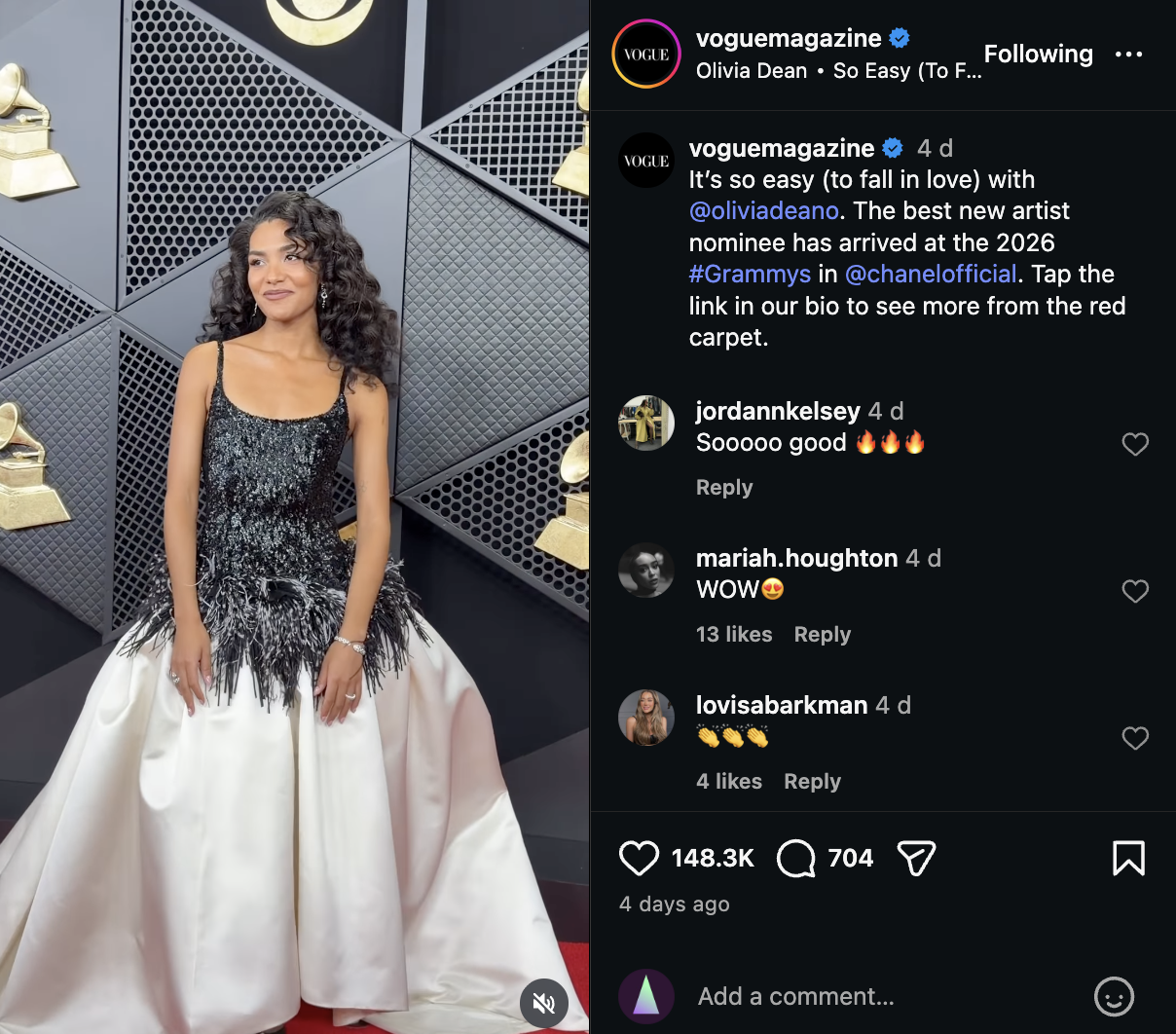
The 2026 Grammy Awards once again confirmed the ceremony as one of the most influential fashion moments of the year, placing luxury brands at the centre of global cultural attention. Vogue’s red carpet coverage and “best moments” galleries highlighted standout looks from Valentino, Saint Laurent, Schiaparelli, Mugler, Balenciaga, Chanel and Alexander McQueen, each connected to defining artist appearances that shaped the fashion conversation around the event.

Key moments included Sabrina Carpenter in Valentino, Rosé and Bruno Mars in Saint Laurent, Chappell Roan in Mugler, Tate McRae in Balenciaga, Olivia Dean in Chanel, and Lady Gaga performing in archival Alexander McQueen. Most notably, Bad Bunny made history as the first Latin artist to win Album of the Year for Debí Tirar Más Fotos, while also debuting Schiaparelli’s first custom haute couture menswear look on a major red carpet, marking a significant milestone for the house.

Below is a focused analysis of the top-performing brands across EMV, engagements and reach, and the strategies that drove their results at the 2026 Grammys.


EMV: Measuring the Commercial Impact of Cultural Presence

Earned Media Value (EMV) quantifies the financial value of brand visibility across earned, owned and influencer channels, making it a key metric for luxury brands assessing the return on major cultural investments like the Grammys. At this level, EMV is less about volume and more about where attention is generated, who drives it, and how long the narrative sustains.
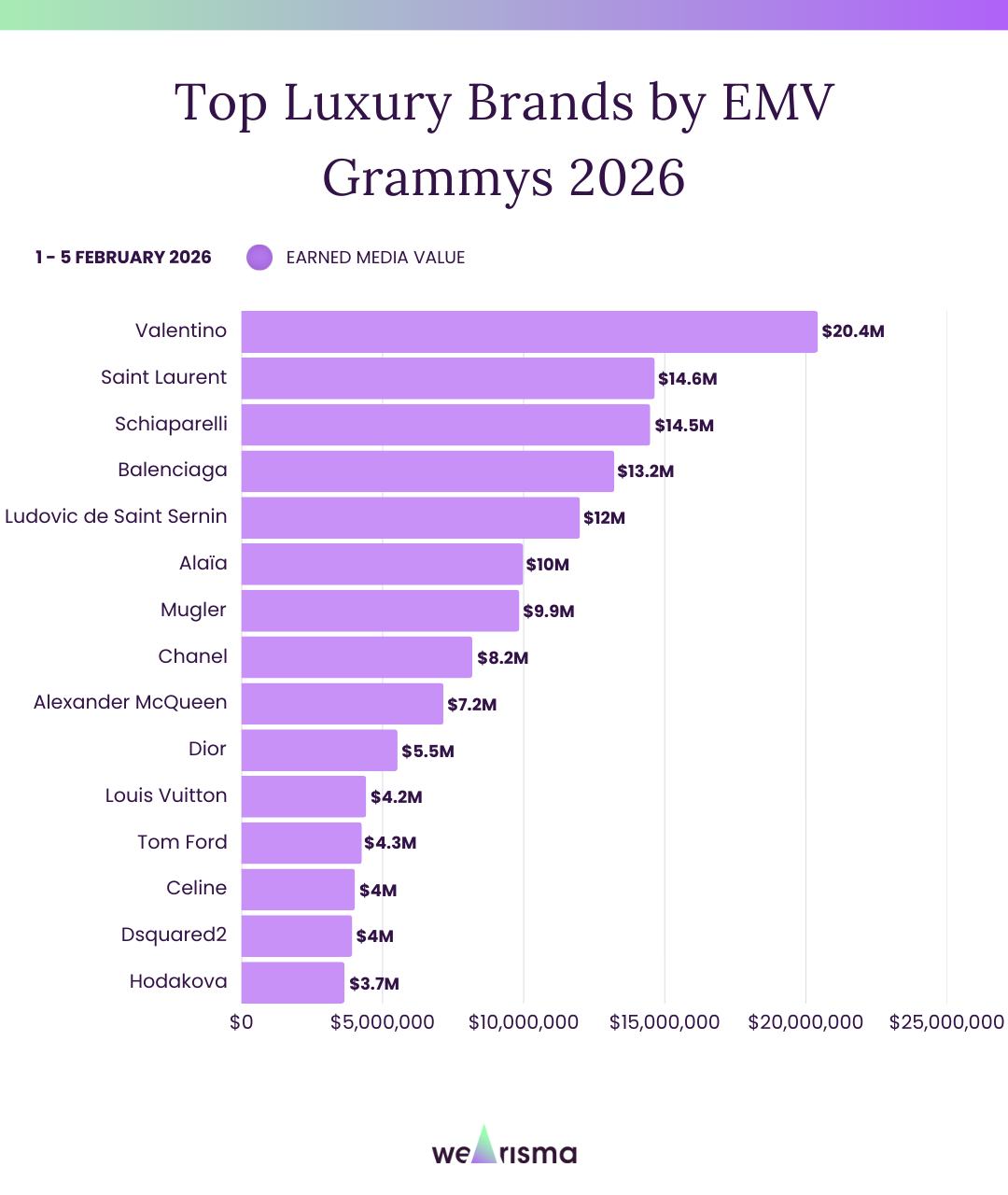
1. Valentino – $20.4M EMV

Press: 49% | Celebrity: 36% | Influencer: 15%

Valentino delivered the strongest overall performance by anchoring its Grammys presence across both red carpet and live performance moments.

Sabrina Carpenter’s red-carpet appearance in Valentino was the primary EMV driver. Her owned Instagram post alone generated $6.96M, highlighting the continued dominance of celebrity-owned media at tentpole cultural events.

Press played a critical role in scale and credibility. Vogue published five pieces of content covering both Carpenter’s red-carpet look and Best New Artist nominee Sombre for his on-stage custom performance outfit, reinforcing Valentino’s relevance across fashion and music audiences.

Valentino’s performance demonstrates the effectiveness of multi-moment activation, where red carpet and broadcast exposure work together to maximise EMV and narrative longevity.


2. Saint Laurent – $14.6M EMV

Celebrity: 68% | Press: 30% | Influencer: 2%

Saint Laurent’s EMV was overwhelmingly driven by celebrity-owned content, with minimal reliance on influencer activity.

The brand dressed Rosé and Bruno Mars for the opening performance of the Grammys, securing one of the night’s most visible moments. Bruno Mars’ Instagram post featuring Rosé generated $9.87M in EMV, accounting for the majority of Saint Laurent’s total impact.
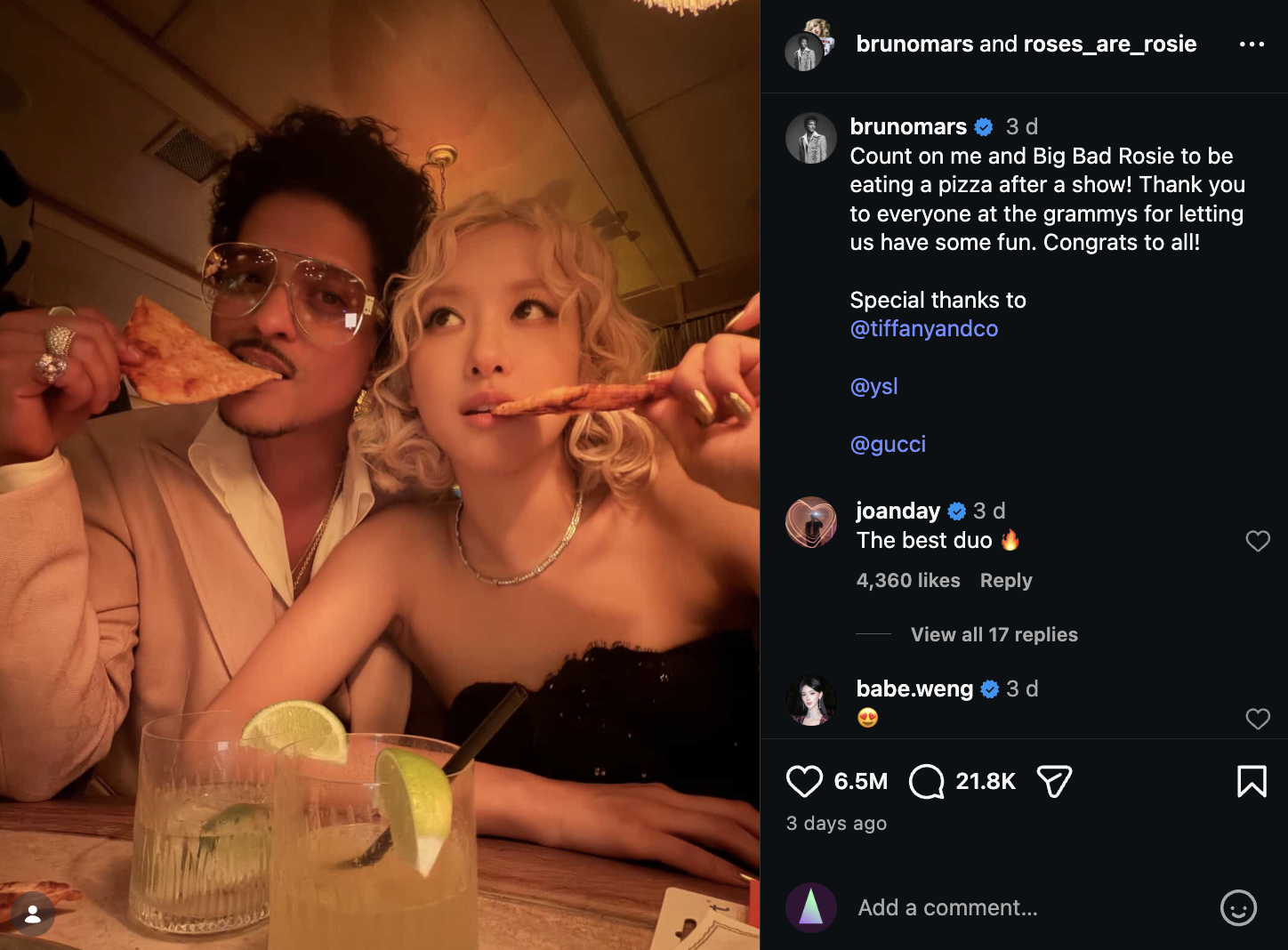
Press coverage, including Vogue’s Instagram content highlighting Rosé in Saint Laurent, added secondary amplification but did not materially drive scale compared to celebrity-owned reach.

Saint Laurent’s results underscore the value of high-impact performance moments and selective talent partnerships, where a single, culturally dominant post can outperform broader influencer strategies.


3. Schiaparelli – $14.5M EMV

Press: 88% | Influencer: 12% | Celebrity: 0%

Schiaparelli’s Grammys performance was defined by cultural significance rather than volume.

Bad Bunny wore Schiaparelli’s inaugural haute couture menswear look, marking a major milestone for the house and introducing its couture menswear offering on one of the world’s most visible stages. The moment coincided with Bad Bunny making history as the first Latin artist to win Album of the Year, significantly increasing press relevance and editorial demand.

Vogue generated $5.76M in EMV across nine pieces of content covering the look across Instagram, TikTok and Facebook, positioning Schiaparelli at the centre of one of the most discussed fashion moments of the night.

Schiaparelli’s impact shows how design-first milestones, when aligned with cultural history, can drive substantial EMV through press without heavy reliance on celebrity-owned or influencer content.

What EMV Leaders Got Right

  • Culturally defining moments outperform volume-based strategies
  • Celebrity-owned media delivers scale fastest when tied to performance or history
  • Press remains essential for authority, longevity and EMV stabilisation


Engagements: Measuring Cultural Impact Beyond Visibility

While EMV captures scale and media value, engagements reveal depth of impact, showing which luxury brands didn’t just appear at the Grammys, but actively sparked conversation, interaction and cultural response. At this level, high engagement is rarely driven by volume alone. It’s the result of provocative design, culturally relevant talent and strong editorial amplification.

At the 2026 Grammys, Mugler and Balenciaga led engagement performance by activating moments that invited reaction, not just recognition.
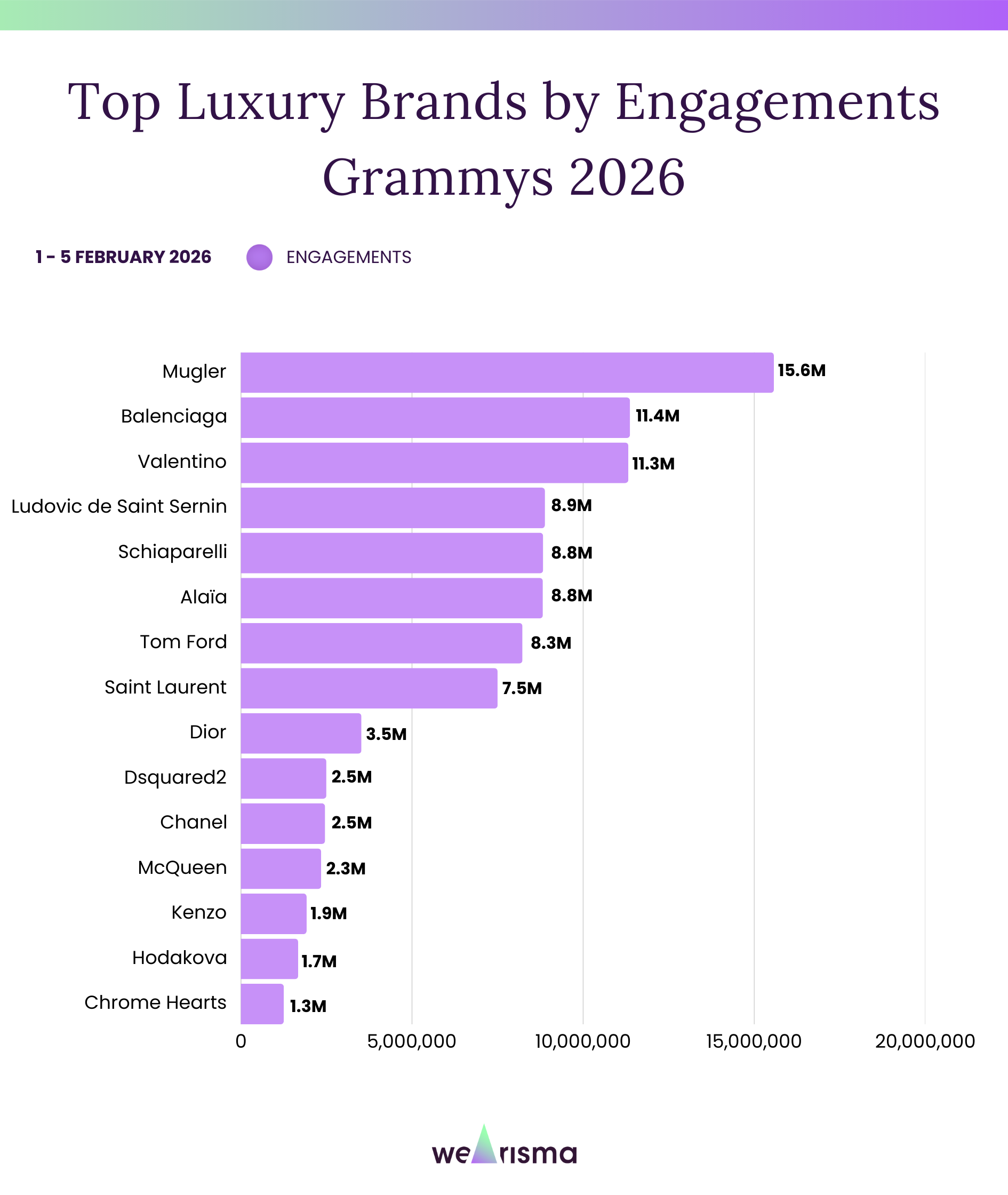
1. Mugler – 15.6M Engagements

Press: 86% | Celebrity: 11% | Influencer: 2%

Mugler ranked first for engagements, driven overwhelmingly by press-led conversation, anchored in one of the most talked-about red-carpet moments of the night.

Vogue generated 11M engagements spotlighting Grammy nominee Chappell Roan in a custom Mugler look. The design became a viral talking point, widely described as having “broken the internet,” driven not by shock alone but by editorial framing that positioned the look as a statement of artistic confidence and modern femininity.

Mugler’s performance demonstrates how distinctive creative risk, when supported by tier-one press, can outperform broader visibility strategies in driving meaningful audience response.


2. Balenciaga – 11.4M Engagements

Press: 87% | Celebrity: 12% | Influencer: 1%

Balenciaga’s engagement performance was similarly press-led, underpinned by strong celebrity relevance and cultural conversation.

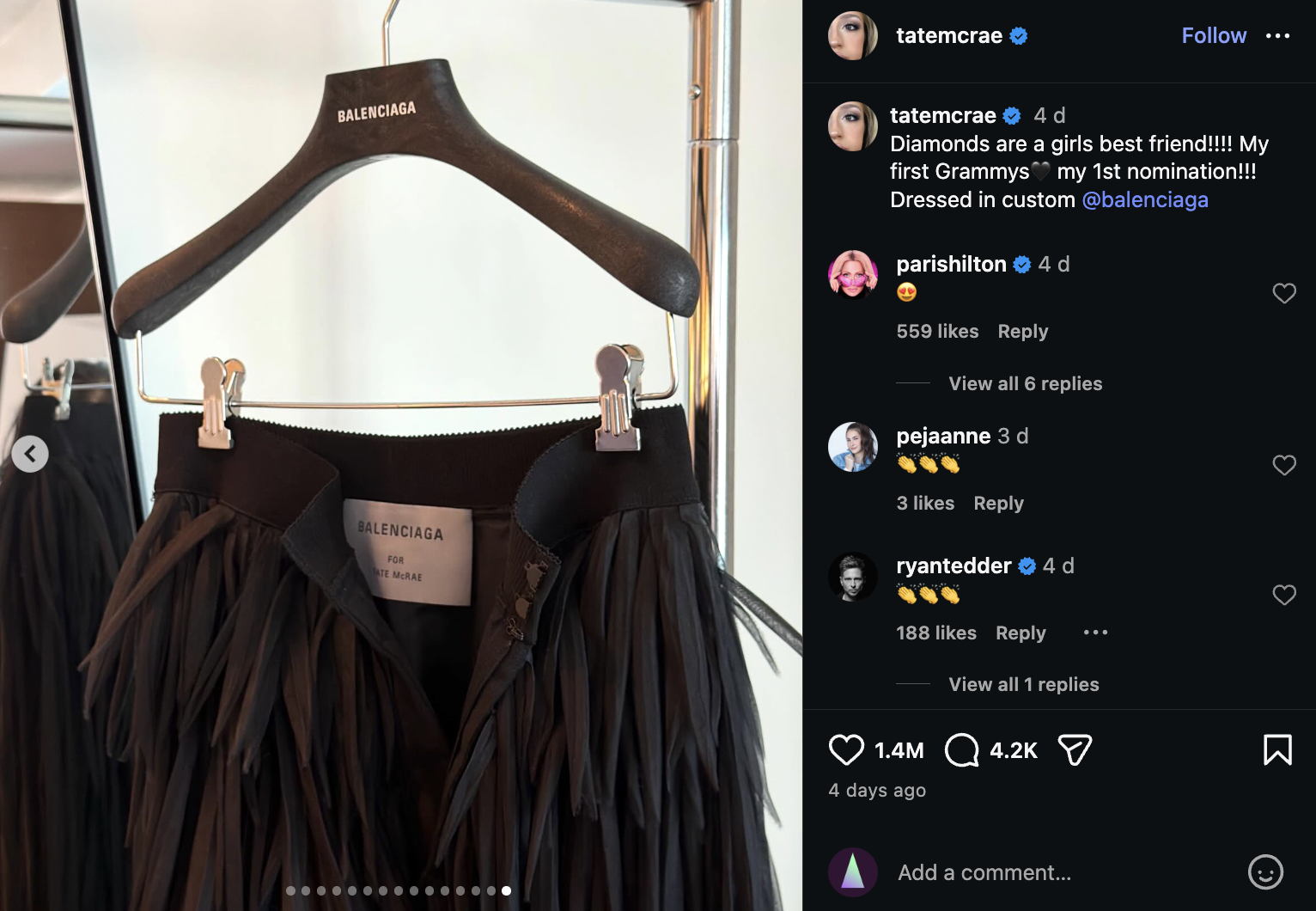
Press coverage around Justin Bieber’s custom Balenciaga look generated widespread commentary, while Tate McRae’s owned content wearing custom Balenciaga generated 1.35M engagements, reinforcing the brand’s resonance with younger audiences.

Balenciaga’s results show how consistent brand codes, paired with culturally relevant celebrities, continue to generate strong engagement without overt provocation.

What Engagement Leaders Got Right

  • Press is the primary engagement multiplier when fashion moments spark debate or cultural conversation
  • Bold creative direction drives interaction, not just impressions
  • Celebrity relevance matters more than influencer volume at luxury scale


Reach: Scaling Visibility at the Grammys

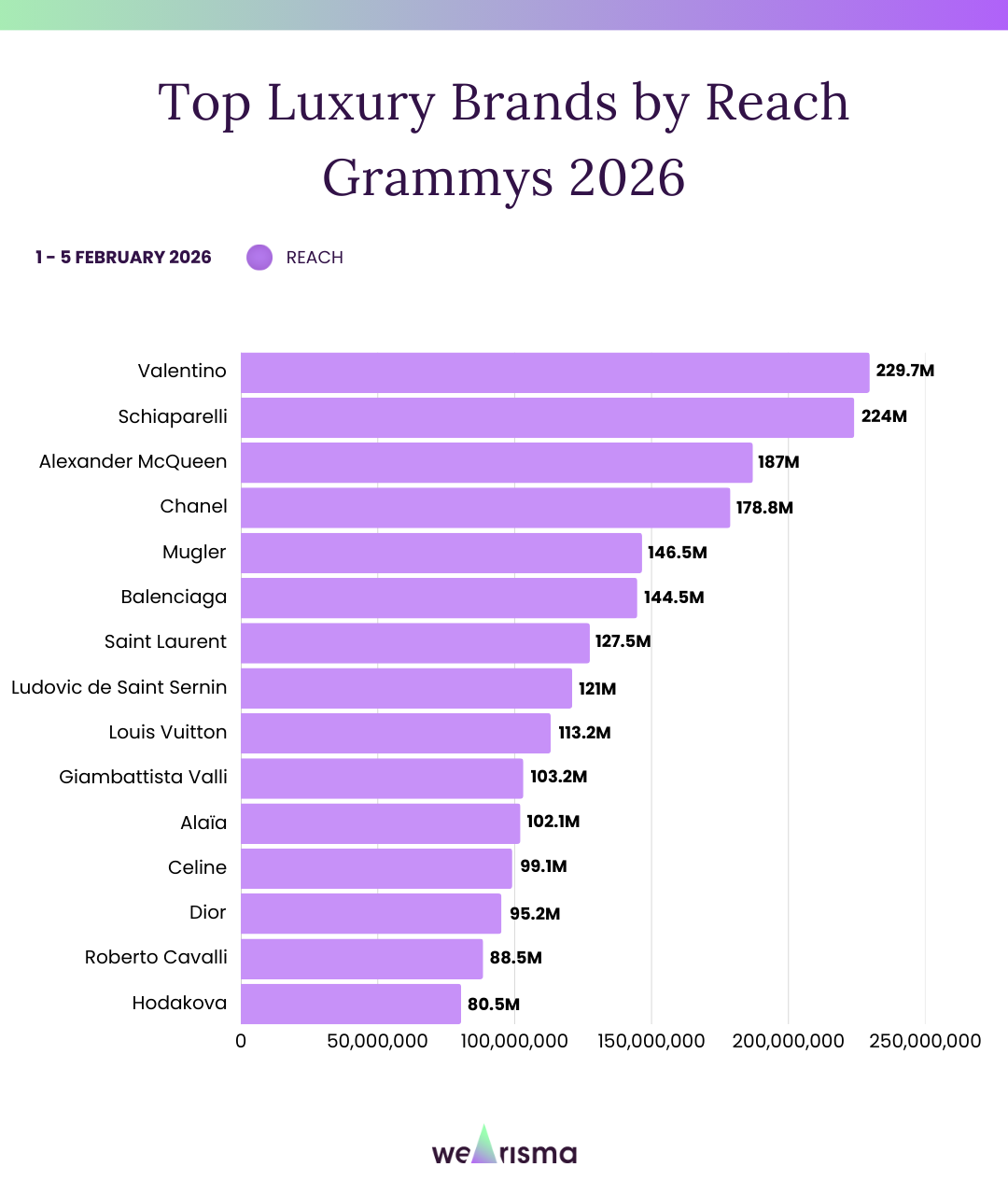
Reach measures how far a brand’s presence travels during a cultural moment. At the Grammys, reach is driven by global celebrities and tier-one press distribution, making it critical for brands prioritising awareness and long-term brand salience.

3. Alexander McQueen – 187M Reach

Press: 68% | Celebrity: 25% | Influencer: 7%

Alexander McQueen’s reach was driven by a single, high-impact cultural moment anchored in performance and brand heritage.

Lady Gaga’s performance in archival Alexander McQueen from the Fall/Winter 2009 collection The Horn of Plenty reached 46M, reframing the moment as both a musical and fashion tribute tied to Lee Alexander McQueen’s legacy.

By aligning archival design with a global artist and live performance, McQueen demonstrated how heritage-led storytelling can scale at moments of mass attention.


4. Chanel – 178.8M Reach

Press: 99% | Celebrity: 0% | Influencer: <1%

Chanel’s reach was primarily driven by press-led amplification, with Vogue as the key distribution engine.

Vogue reached 31M, spotlighting Best New Artist winner Olivia Dean in a custom Chanel gown.


What Reach Leaders Have in Common

  • Performance moments scale reach faster than static appearances
  • Heritage and archival storytelling travel well at mass events
  • Tier-one press remains a core reach driver at luxury scale


Final Takeaway: Why the Grammys Continue to Matter for Luxury Brands

The 2026 Grammy Awards showed that luxury impact lies not in scale alone, but in strategic cultural placement. Across EMV, engagements and reach, the strongest brands aligned with moments already primed for global attention.

As the Grammys continue to sit at the intersection of music, fashion and culture, they remain a critical moment for luxury brands not just to be seen, but to define how they are remembered.

Book a call with the WeArisma team to discuss how cultural events, talent partnerships and media strategies can be measured, optimised and scaled for impact.

Frequently Asked Questions: Luxury Brands, Fashion and the Grammys

Why do luxury fashion brands invest so heavily in the Grammy Awards?
Luxury brands invest in the Grammys because the event delivers global reach, high engagement and strong Earned Media Value through a unique mix of red-carpet fashion, live performances and award-winning cultural moments. Unlike traditional fashion events, the Grammys connect brands with music artists who command highly engaged, cross-generational audiences.

How does Grammy Awards fashion influence luxury brand perception?
Fashion moments at the Grammys shape how luxury brands are perceived culturally. Bold creative risks, archival references and custom designs help position brands as culturally relevant, progressive or heritage-led, depending on the strategy. These moments often define brand narratives for the year ahead.

Which metrics matter most when measuring luxury brand success at the Grammys?
The most important metrics are Earned Media Value (EMV), engagements and reach. EMV measures the commercial value of exposure, engagements indicate cultural resonance and audience response, and reach captures total visibility across global platforms and press.

Why do performance moments drive more impact than red-carpet appearances?
Live performances generate real-time cultural attention, social sharing and press amplification. When fashion is integrated into a performance or award-winning moment, it becomes part of the cultural narrative rather than a standalone look, significantly increasing EMV, engagement and reach.

How important is press coverage for luxury brands at the Grammys?
Press remains essential. Tier-one outlets such as Vogue play a critical role in validating fashion moments, sustaining narratives beyond the event itself and driving both reach and EMV. For many luxury brands, press is the primary driver of engagement and long-term visibility.

Are the Grammys more valuable than film awards for luxury fashion brands?
For engagement and youth-driven relevance, the Grammys often outperform film awards. Music artists typically generate higher social engagement and faster cultural momentum, making the Grammys particularly valuable for brands targeting Gen Z and millennial audiences.

How do luxury brands choose which artists to dress for the Grammys?
The most effective strategies prioritise cultural relevance, upcoming award momentum and performance visibility over sheer follower count. Artists who are performing, nominated or making history tend to deliver the strongest returns for luxury brands.

Can smaller luxury brands compete at the Grammys?
Yes – Schiaparelli’s 2026 performance shows that culturally significant design moments and press-led storytelling can outperform scale-driven strategies. Creative distinction and cultural relevance matter more than volume.

How does Grammy Awards fashion impact long-term brand equity?
Successful Grammy moments extend beyond the event, influencing brand perception, press narratives and future collaborations. When aligned with cultural milestones, these moments contribute to long-term brand desirability and authority.

Resources

Stay Ahead with the Latest Creator Economy Intelligence

Access timely cultural trends, strategic creator guidance, and industry best practices.

Entertainment Marketing: Leveraging Pop Culture For Brand Success: Key Panel Takeaways

Discover the most groundbreaking entertainment marketing insights from our eye-opening panel discussion at ‘The State of Influence 2025 and future-proof your brand for tomorrow’s creator economy.

New York Fashion Week FW26

Luxury Global Analysis.

New York Fashion Week FW26 generated $275M in total Media Value, up +73% YoY, but leadership was highly concentrated and strategically differentiated.

Regional power shifts and platform momentum reshaped the competitive landscape.

2026 Beauty Influencer Marketing Trends

Coty: Client Success Story

Stay Ahead with WeArisma Intelligence

Join our community and get cultural insights, creator strategy guides, and real-world best practices.

  • See who’s shaping culture, and how.
 
  • Access practical guides and strategy tools.
 
  • Understand how top brands are growing ROI and productivity.
 
  • Read expert takes on what’s next.

Join the Community