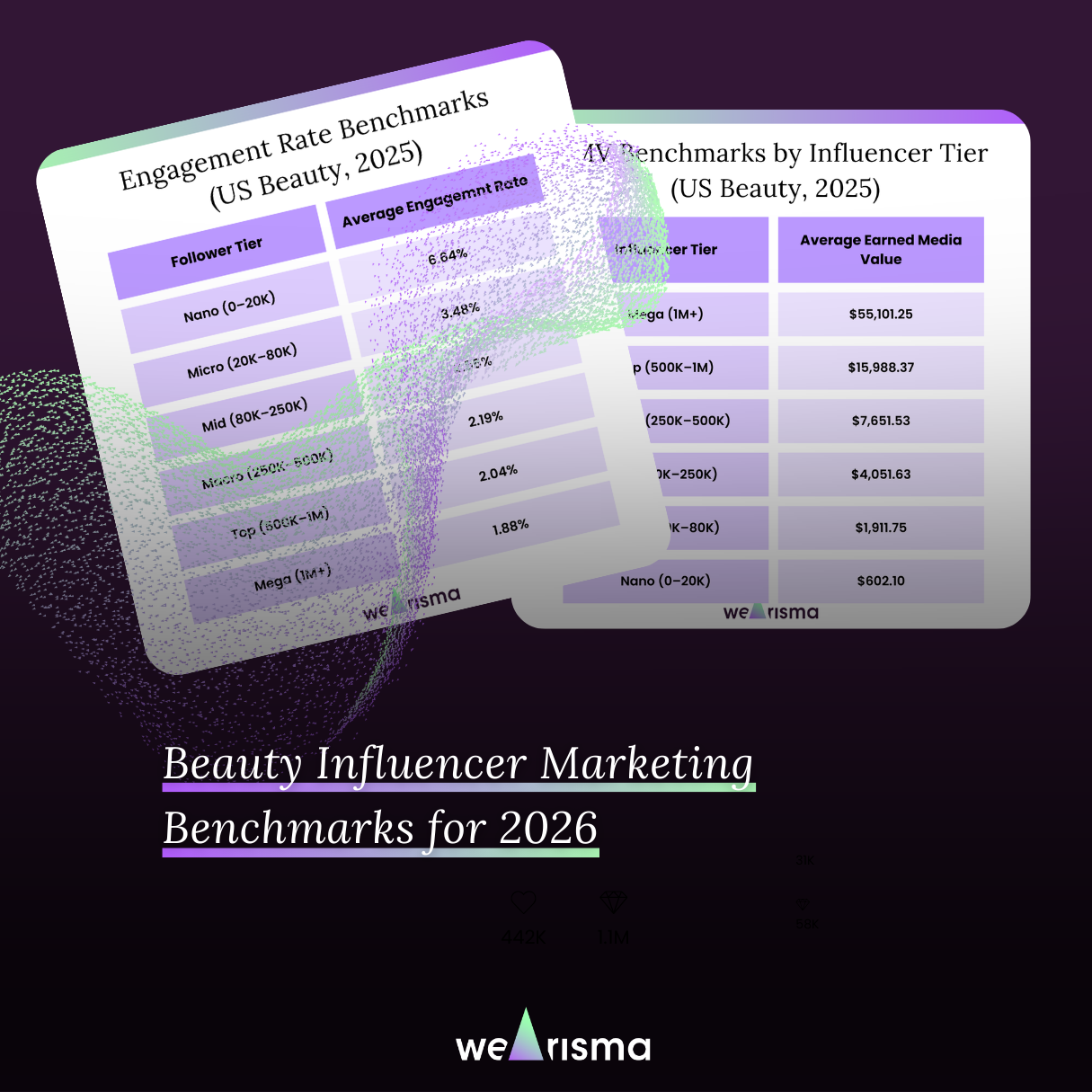
2025 interactive ranking of top 100 beauty brands now live! Explore who’s leading across EMV, engagement, reach, and growth.
 2025 interactive ranking of top 100 beauty brands now live! Explore who’s leading across EMV, engagement, reach, and growth.
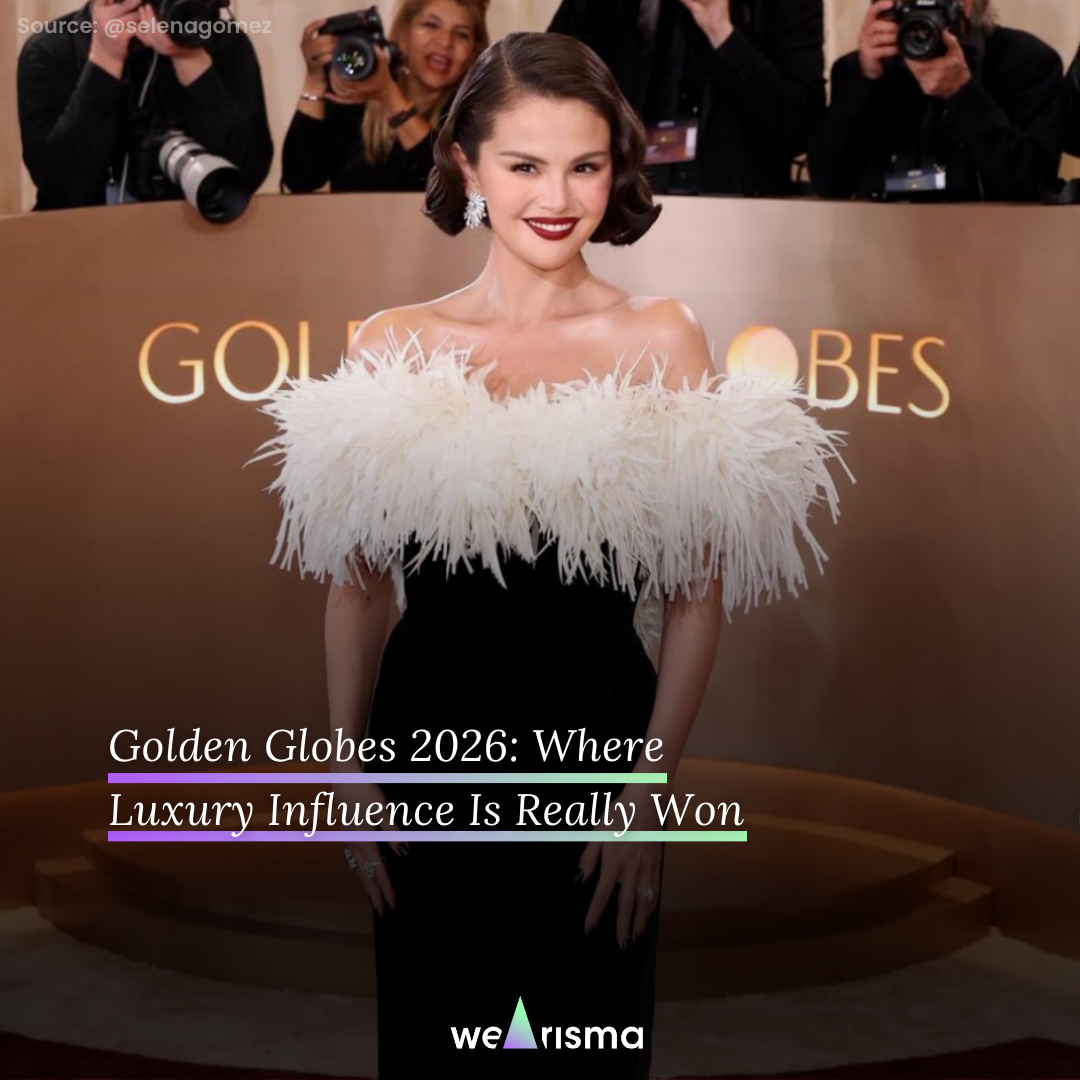
For today’s leading luxury brands, success is no longer defined by who wears the brand, but by how that moment is activated across the full communications stack:
Across leading houses such as Louis Vuitton, Chanel and Vivienne Westwood, performance followed different patterns. Chanel and Vivienne Westwood’s impact was driven primarily by celebrity-owned content, where single talent posts delivered the majority of earned media value. By contrast, other brands relied more heavily on press-led amplification, with editorial coverage accounting for a significant share of total EMV.
The takeaway from Golden Globes 2026 is straightforward: luxury brands do not win awards season in the same way. Impact is created through different channels, press, celebrity-owned platforms or organic social, and the strongest results come when brands understand which lever is driving value for them, rather than assuming the red carpet alone is enough.
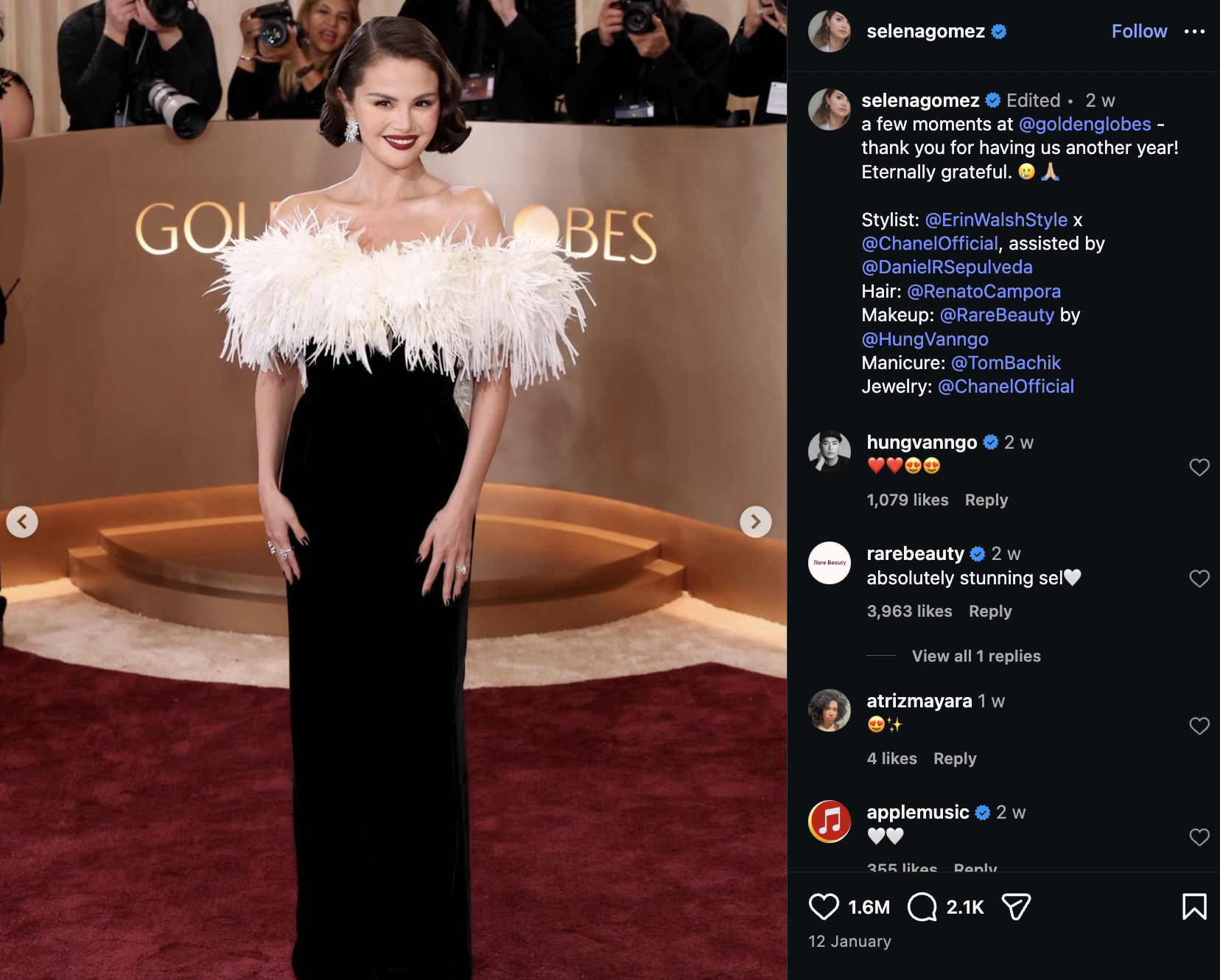
Chanel generated the highest total EMV of the Golden Globes 2026 ($14.8M), with the majority of its value driven by celebrity-owned content, not press.
53% from celebrity-owned EMV ($7.9M)
39% from press coverage ($5.8M)
8% from influencer and organic social ($1.1M)
A single Instagram post from Selena Gomez wearing Chanel generated $7.9M in EMV, accounting for nearly all of the brand’s celebrity-driven impact.
Takeaway:
Chanel demonstrates how the most powerful luxury talent partnerships are those where the celebrity becomes a distribution channel, extending the brand beyond editorial coverage into direct, owned influence.
Saint Laurent’s $11.2M EMV performance followed a fundamentally different model, one rooted in editorial authority and press amplification rather than celebrity-owned reach.
80% from press EMV ($8.9M)
20% from influencer and social ($2.2M)
1% from celebrity-owned content ($77K)
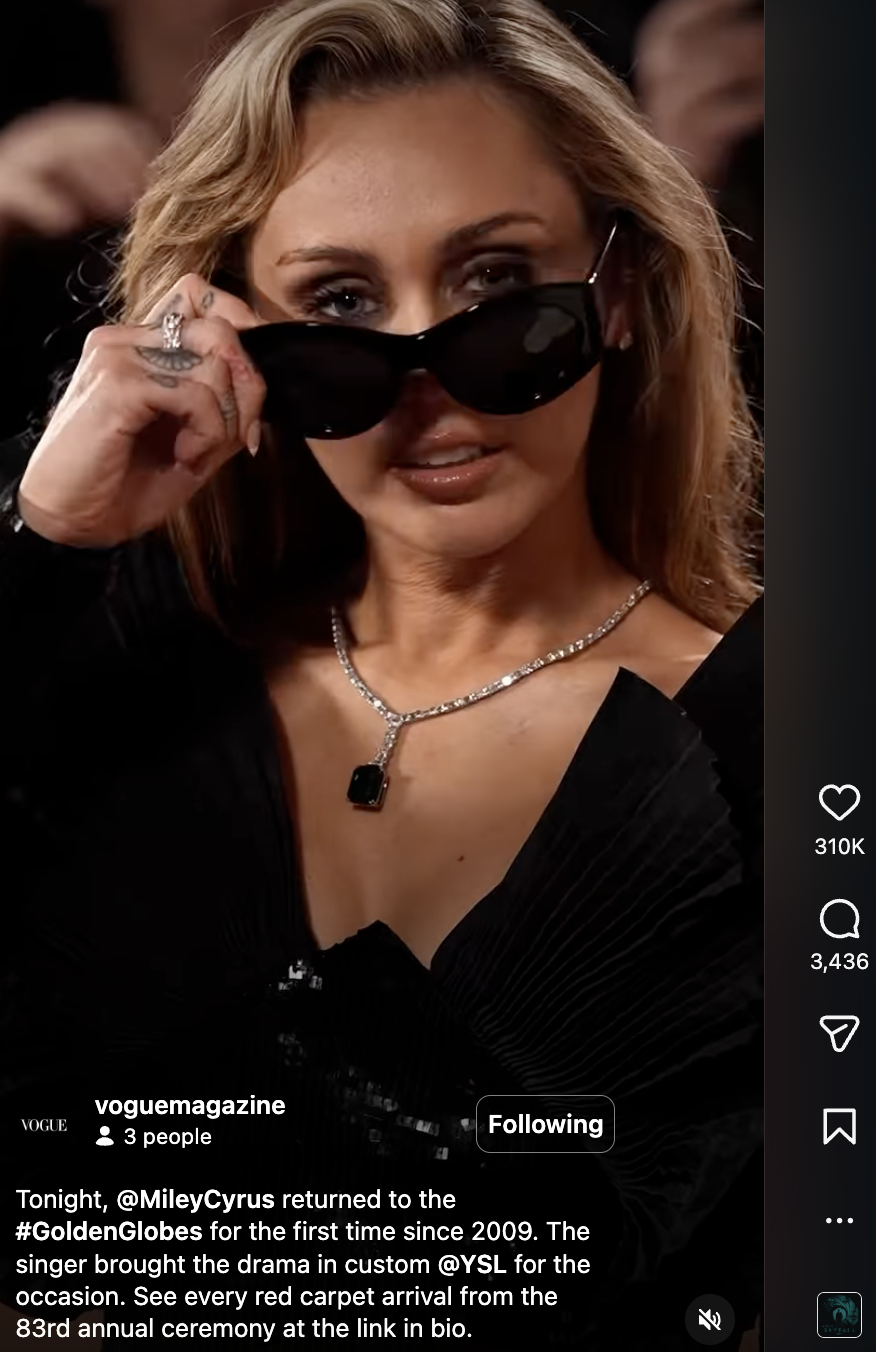
The majority of coverage centred on Miley Cyrus wearing Saint Laurent, with global fashion and culture titles driving sustained conversation. Notably, Vogue alone generated $2.12M in EMV.
Takeaway:
Saint Laurent proves that, in luxury fashion, press can still outperform celebrity-owned platforms when the narrative aligns with editorial credibility, craftsmanship and cultural authority.
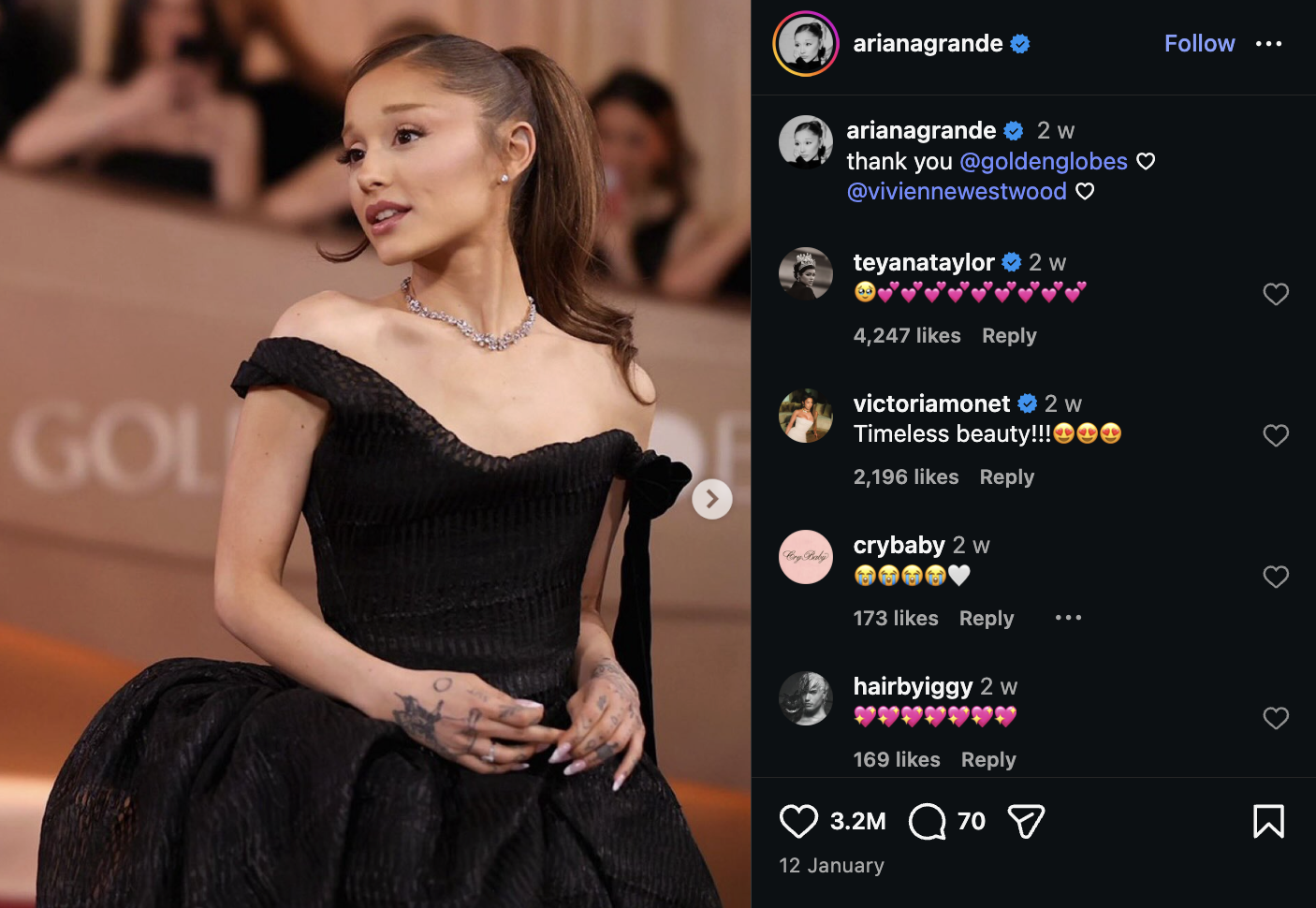
Vivienne Westwood generated $14.0M in EMV, with impact overwhelmingly driven by celebrity-owned scale.
70% from celebrity EMV ($9.8M)
26% from press coverage ($3.7M)
4% from influencer amplification ($519K)
A single Instagram post from Ariana Grande wearing Vivienne Westwood delivered $9.66M in EMV, underscoring the brand’s reliance on high-impact, high-reach talent moments.
Takeaway:
Westwood’s Golden Globes performance highlights how the right celebrity partnership can deliver outsized results through owned reach alone, with press acting as a secondary amplifier rather than the core driver.
One strategic truth emerges clearly from Golden Globes 2026:
Awards season impact is no longer about presence, it is about channel mechanics.
Even among the top-performing luxury brands, the source of value differed dramatically:
Chanel won through celebrity-owned reach
Saint Laurent won through press authority
Vivienne Westwood won through viral talent momentum
For luxury brand, communications and talent leaders, this creates a new imperative.
The future of awards-season marketing is not simply dressing celebrities.
It is designing distribution.
Luxury houses must now ask:
Are we investing in talent who generates press narrative, owned engagement, or both?
Do we understand where our earned media value is actually coming from?
Are we building cultural impact through media institutions or celebrity-controlled platforms?
Because in today’s influence economy, talent is not a moment, it is infrastructure.
Understand where your awards-season impact truly comes from.
Discover how Wearisma measures press authority, celebrity-owned influence and social amplification — and how luxury brands can design smarter, more accountable talent strategies.
Awards season has become one of the most influential cultural moments for luxury brands, concentrating global press, celebrity attention and social conversation into a short time window. When strategically activated, it can drive outsized brand impact, prestige and long-term cultural relevance.
There is no single winning model. As Golden Globes 2026 shows, some luxury houses win through press authority, while others scale impact through celebrity-owned platforms. The most effective strategy depends on brand positioning, talent alignment and distribution goals.
Luxury brands should evaluate talent not only on visibility, but on distribution power, including press pull, owned audience reach and engagement quality. The most effective partnerships treat talent as an influence infrastructure, not just a red carpet moment.
Golden Globes 2026 confirms that luxury influence is shifting from presence to performance. The future of awards-season strategy lies in understanding where value is generated, across press, celebrity-owned media and organic social, and designing talent strategies accordingly.